

Hang gliding in Latvia helps you discover the world from a height, where every second is full of freedom and a sharp sense of excitement. More than 70 percent of newcomers initially consider this sport dangerous, however, modern safety standards and certified instructors have significantly reduced the risks. Here you will discover how hang gliding actually works and what myths mislead beginners, allowing you to take your first steps in the air above the Latvian nature with greater confidence.
Table of contents
Main conclusions
| Point | Detailing |
| Hang gliding safety | Modern equipment and professional training improve the safety of hang gliding flights. |
| Types of hang gliders | There are different types of hang gliders, each with different characteristics and suitability. |
| Flight process | Flight is controlled by body movements and proper wind perception is critical. |
| Expenses | The sport of hang gliding can be expensive, including training and equipment, so it is important to evaluate your options before making an investment. |
What is hang gliding and the myths
Hang gliding is a special type of flying that allows you to experience the feeling of freedom and adrenaline without a mechanical engine. This air sport is a special activity in which the pilot controls a light, non-motorized aircraft using their own body weight and movements to control the flight.
Historically, hang gliding began as early as the 9th century, when people began experimenting with the possibilities of flying. Otto Lilienthal and other pioneers made important discoveries about aerodynamics, which became the basis for the development of modern hang gliding. At first, this sport was quite dangerous and limited, but with the improvement of technology and equipment, it has become much safer and more accessible.
There are several myths about hang gliding. One of the most common is the belief that it is an extremely dangerous sport. In fact, nowadays, thanks to improved equipment and professional training, hang gliding has become much safer. The second common myth is that such a flight requires special physical fitness - in fact, with proper instruction and training, people of all physical fitness levels can master this activity.
Pro tip: Always choose a certified instructor and carefully study the safety rules before your first hang gliding flight.
Types of hang gliders and flight styles
Hang gliders are complex aircraft with a variety of designs and flying styles. Hang glider types include several categories that differ in wing design and aerodynamic characteristics. The main types are delta wings, flexible wings, single and double-surface gliders, and rigid wings.
Each type of hang glider is suitable for different flight styles. For example, delta wings are particularly popular for recreational and sports activities, while more rigid gliders are designed for more professional use. Flight styles include calm gliding, long-distance flights, as well as aerobatic elements that require high pilot skill and specific design features.
Wing design significantly affects flight characteristics. Single-surface gliders are lighter and more suitable for beginners, while dual-surface gliders provide greater stability and control. Stiffer-structured gliders allow for greater speed and accuracy, but require a higher level of pilot training.
Here is a comparison of different types of hang gliders and their uses:
| Hang glider type | Features | Who is suitable for | Level of requirements |
| Delta wings | Standard design, easy to operate | Recreational and training flights | Low to medium |
| Flexible wings | Better aerodynamics, foldable | For sports competitions | Medium |
| Single surface planner | Lightweight, simple construction | For beginners, easy flights | Low |
| Two-way surface planner | High stability and control | For experienced pilots | Medium to high |
| Rigid wing | Solid construction, higher speed | For professional use | High |
Pro Tip: When choosing a hang glider, consult with an experienced instructor to find the best option for your skill level and desired flying style.
How the flight process and management works
Hang gliding is a special art that relies on the pilot's ability to shift their body weight in relation to the control system. Unlike traditional aircraft, hang gliding pilots control the aircraft by moving their body in a special harness attached to a control frame under the wings.
The basic principles of flight control involve shifting the weight of the body in different directions. By moving forward or backward, the pilot can influence the pitch and speed of the aircraft, while by gliding sideways, it is possible to make turns. This method of control requires a high level of pilot skill and precise movements, as the hang glider is very sensitive to body movements.
The flight usually begins from a cliff or cliff edge. After takeoff, the pilot uses air currents and thermals to maintain altitude and control the flight path. An important role is played by understanding the direction and strength of the wind, as well as the ability to instantly react to changing atmospheric conditions. Each flight is a unique experience that requires complete concentration and pilot skills.
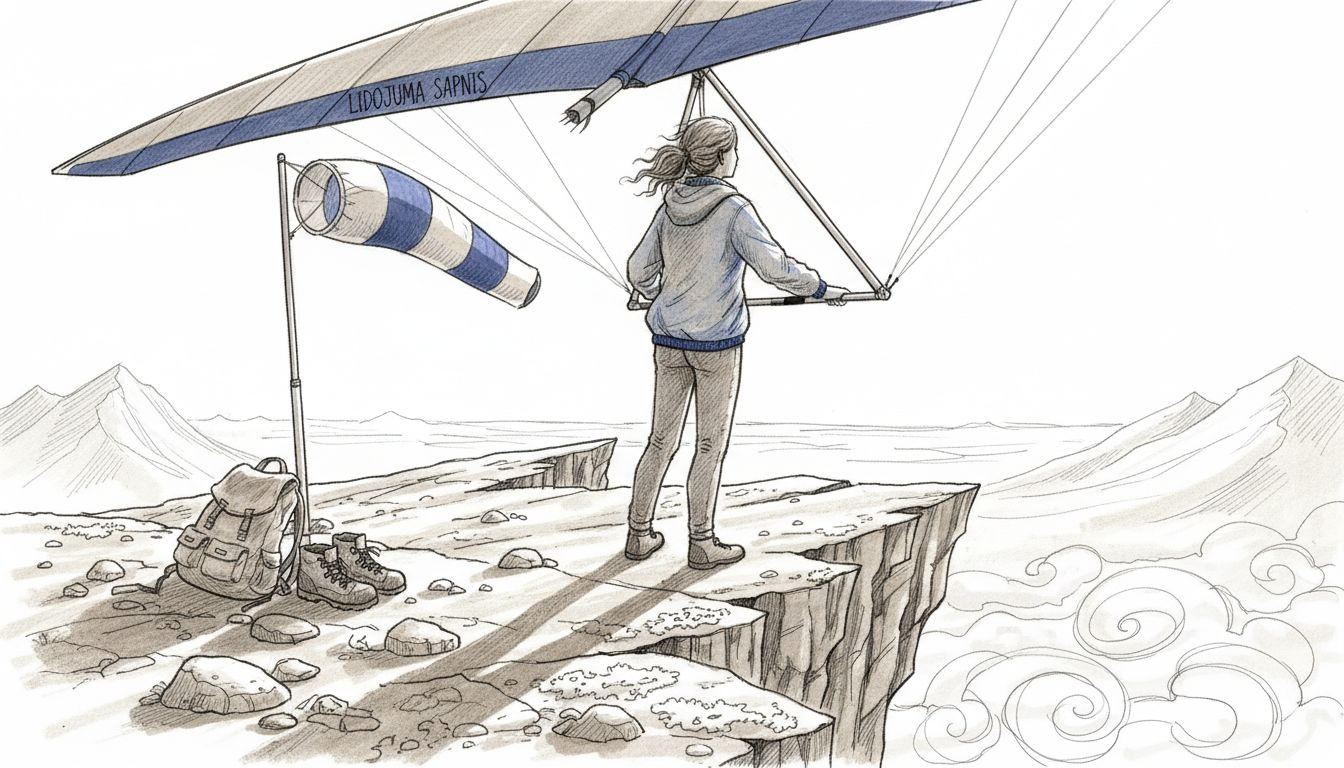
Professional advice: Before flying on your own, be sure to learn basic skills under the guidance of a professional instructor and conduct several training flights in a safe environment.
Safety standards and necessary preparation
International safety standards for hang gliding are strictly regulated and structured in stages. They cover several essential aspects, from pilot training to equipment certification and ongoing skill development. Each pilot must undergo a gradual training program that ensures gradual acquisition of skills and safety awareness.
Preparation for hang gliding flights includes several mandatory components. Professional training is required, during which the pilot acquires theoretical knowledge of flight physics, meteorology and safety regulations. The use of special equipment is also absolutely mandatory - a safety helmet, special protective clothing and safety harnesses, which are certified according to international standards.
Before each flight, a thorough equipment check and weather assessment are necessary. It is important to understand the wind direction, strength and atmospheric characteristics in a particular location. The pilot should not rely solely on his skills, but must systematically analyze all possible risk factors. In addition to technical preparation, psychological readiness is also necessary - calmness, concentration and the ability to adequately assess the situation.
Professional advice: Before an individual flight, be sure to consult with an experienced instructor and perform at least 5-10 training flights in supervision mode.
Risks, costs and common mistakes
The risk assessment of hang gliding flights is a complex process that includes several important factors. The main risk components are pilot error, insufficient training, environmental conditions, technical condition of equipment and suitability of the chosen flying site. Each of these factors can significantly affect the safety of the flight.
The most common mistakes made by beginners include misjudging the weather, not checking their equipment properly, and over-reliance on their own skills. Studies show that most accidents are not caused by technical equipment failure, but by the pilot making poor decisions and losing control. Especially dangerous are situations where the pilot does not pay enough attention to changes in wind direction and strength.
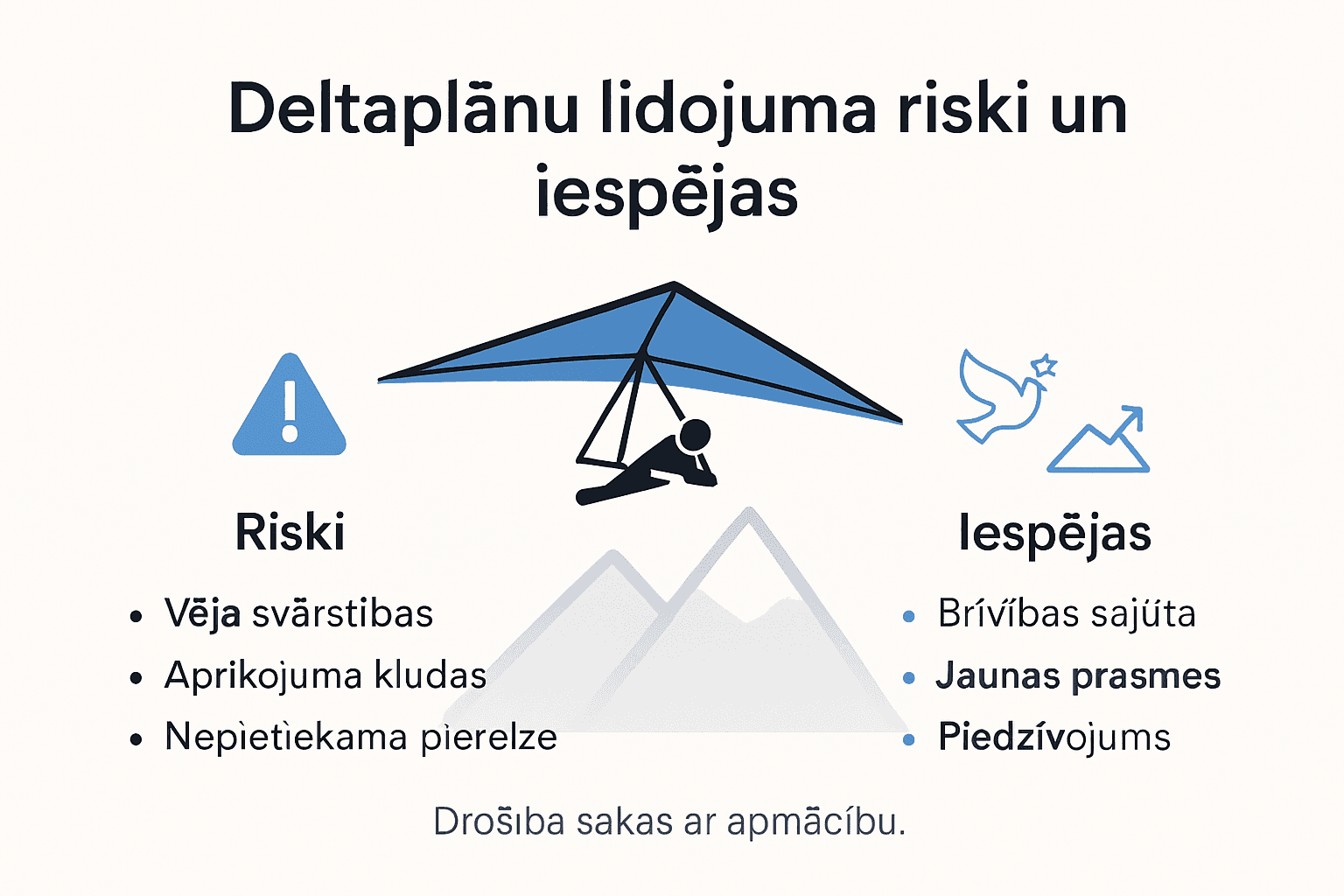
This table summarizes the main risks of hang gliding and their effects:
| Risk | Possible consequences | How to reduce |
| Pilot errors | Loss of control, accidents | Regular training and supervision |
| Bad weather conditions | Take-off or landing risks | Weather forecast analysis |
| Equipment damage | Risk of technical failure | Pre-flight inspection |
| Overreliance on oneself | Insufficient safety assessment | Consulting and education |
In terms of costs, hang gliding is not cheap. The most important expenses include initial training, which can cost from 500 to 2000 euros, professional equipment, the price of which varies from 2000 to 5000 euros, as well as regular maintenance and the purchase of additional safety equipment. It is also essential to plan for health insurance, which is especially important in such a risky sport.
Pro tip: Before investing heavily in hang gliding, take at least three trial lessons with a professional instructor to realistically assess your interests and abilities.
Feel the adrenaline and safety with our offers too
A hang glider flight provides a unique opportunity to feel freedom and confidence in your ability to fly this special aircraft. However, as described in the article, safety standards and professional training are mandatory to make this experience unforgettable and safe. If you are looking for adventures that combine adrenaline and careful preparation in Latvia, Skydive Latvia is the right place to expand your capabilities.

Try our unique educational and exciting classes led by certified instructors. Visit the Skydive Latvia website and learn more about safety principles, training options and the types of flights offered. Don't miss the opportunity to discover new flying experiences and purchase a gift card that will surprise every adventure seeker. Do it today and become a safe and confident flight master!
Frequently asked questions
What is a hang glider flight?
Hang gliding is an air sport in which a pilot flies a light, non-motorized aircraft using body weight and movements to control the flight.
What are the main types of hang gliders?
The main types of hang gliders are delta wings, flexible wings, single and double-surface gliders, and rigid wings, each with its own characteristics and applications.
How does the hang glider flight process work?
The flight process begins from a ledge or cliff edge, where the pilot takes off into the air using air currents and thermal currents and controls the aircraft by moving the body in a harness.
What are the main risks associated with hang gliding?
The main risks include pilot error, insufficient training, adverse weather conditions and technical defects in equipment. It is essential to analyze all possible risk factors and prepare for the flight according to safety standards.