

Updated: March 2026 | Last reviewed: March 2026
Real estate investment in Latvia in 2026 offers average gross rental yields around 7.8%, apartment prices in Riga ranging from €700 to €4,300/m², and market activity at its highest since 2007. One of the most compelling investment stories right now is the Skanste district — Riga's fastest-growing neighbourhood, where a €21.7 million park, the New Hanza development, and Rail Baltica infrastructure are creating an entirely new part of the city. This guide covers everything: market data, taxes, financing, specific Skanste projects — and why it may be the best place to invest in Riga in 2026.
- Why does Latvia attract investors in 2026?
- How much does an apartment cost in Riga and the regions?
- Why is Skanste Riga's hottest investment zone?
- What specific projects are being built in Skanste right now?
- What is the rental yield and how to calculate it?
- What taxes and fees should you know about?
- How to finance your first investment?
- What are the key risks?
- District comparison for investors
- Practical steps for beginners
- Frequently asked questions
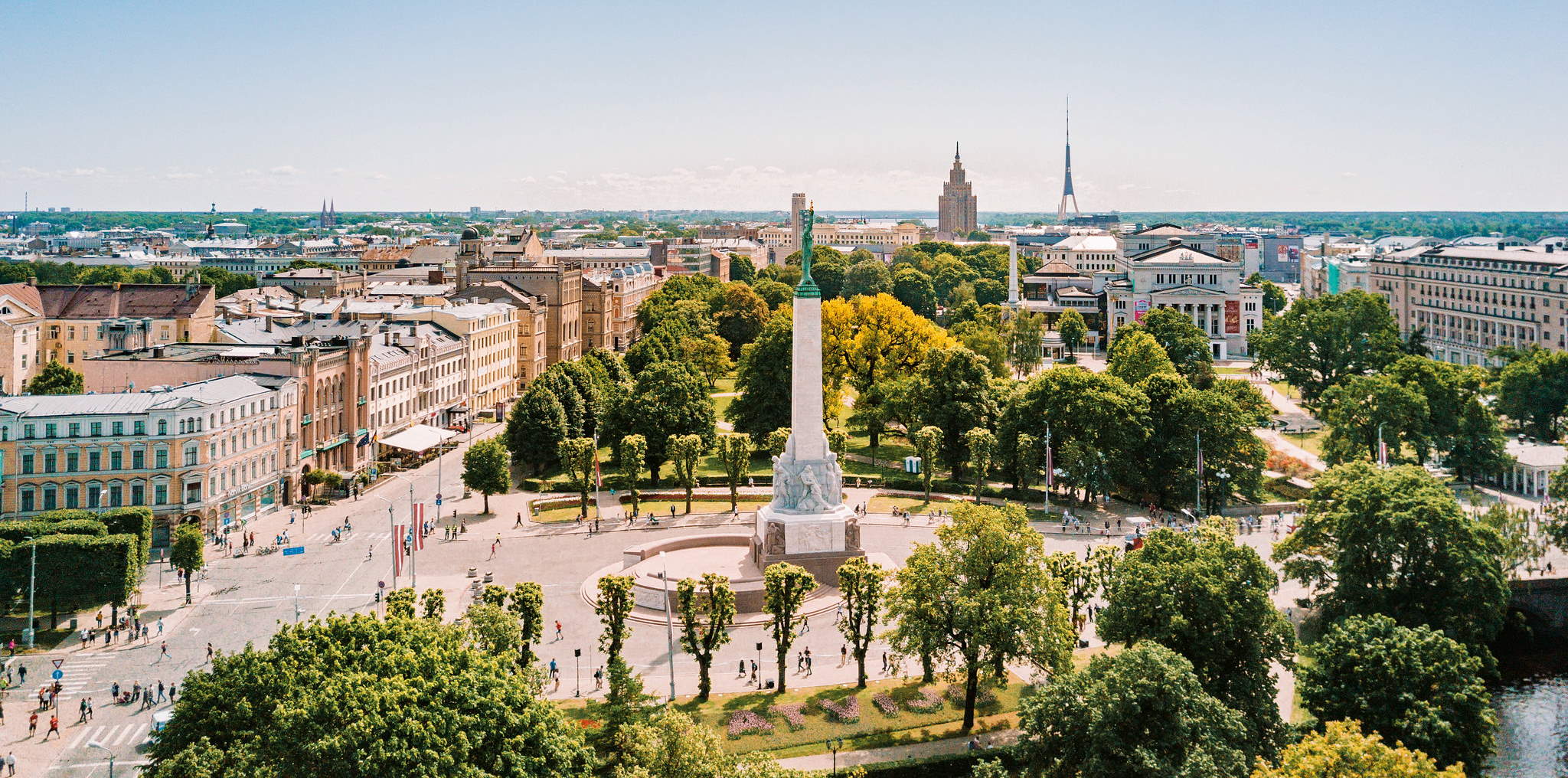
Why does Latvia attract real estate investors in 2026?
Latvia is a Eurozone country with comparatively low prices, high rental yields, and steady market growth — all at once. Average standard apartment prices in Riga sit at ~€912/m², which is 30–40% lower than Estonia and Lithuania. This gap suggests convergence potential.
The 2025 numbers are striking. Riga apartment transactions grew 14.7% year-on-year to the highest level since 2007. Total commercial RE investment reached €316 million, with a historically unprecedented 72% domestic share (typical: ~24%). Latvia attracted 31 investment projects worth €1.01 billion through LIAA in 2025 alone — a national record. GDP forecast for 2026 has been raised to 2.6%, wages are rising, and mortgage rates have eased from 2024 peaks to around 4–4.3%.
How much does an apartment cost in Riga and the regions in 2026?
Standard segment: €650–1,100/m² depending on district. New builds in the centre and Skanste: €2,600–4,300/m². Existing apartment prices grew 9.4% in 2025 — 2.5x faster than new builds (3.8%). The premium segment (from €150,000) saw 28% growth in H1 2025.
| District / city | Standard (€/m²) | New builds (€/m²) | Annual growth |
|---|---|---|---|
| Skanste / Old Town / Centre | 1,000–1,300 | 2,900–4,300 | 6–10% |
| Jugla | ~750–900 | 1,800–2,200 | 10–14% |
| Imanta | ~750–900 | — | 10–14% |
| Teika | ~900–1,050 | 2,000–2,800 | 5–8% |
| Āgenskalns | ~850–1,000 | 1,800–2,500 | 5–9% |
| Jūrmala | ~812 | 2,200–3,200 | volatile |
| Ogre / Salaspils | 835–871 | 1,200–1,800 | 1–4% |
| Jelgava | ~758 | 1,000–1,400 | ~3% |
| Bolderāja (cheapest) | ~650 | — | — |
Key nuance: the average gap between listing price and transaction price is about 6% — buyers typically close at ~94% of the asking price.
Why is Skanste Riga's hottest investment zone?
Skanste is Riga's fastest-growing district — a completely new-built part of the city with a 15-hectare park, A+ energy-class buildings, and projected value appreciation of 6–10% annually. It is now one of Riga's three most expensive areas alongside Old Town and the Quiet Centre.
Twenty years ago, this was a degraded freight railway station. Today it houses over 53,000 m² of A/B class office space (Skanstes City), the cultural venue Hanzas Perons, and completely new street infrastructure. In April 2025, the city opened a €21.7 million park project co-financed by the European Regional Development Fund — with walking trails, water landscapes, a skatepark, volleyball courts, and playgrounds across nearly 15 hectares.
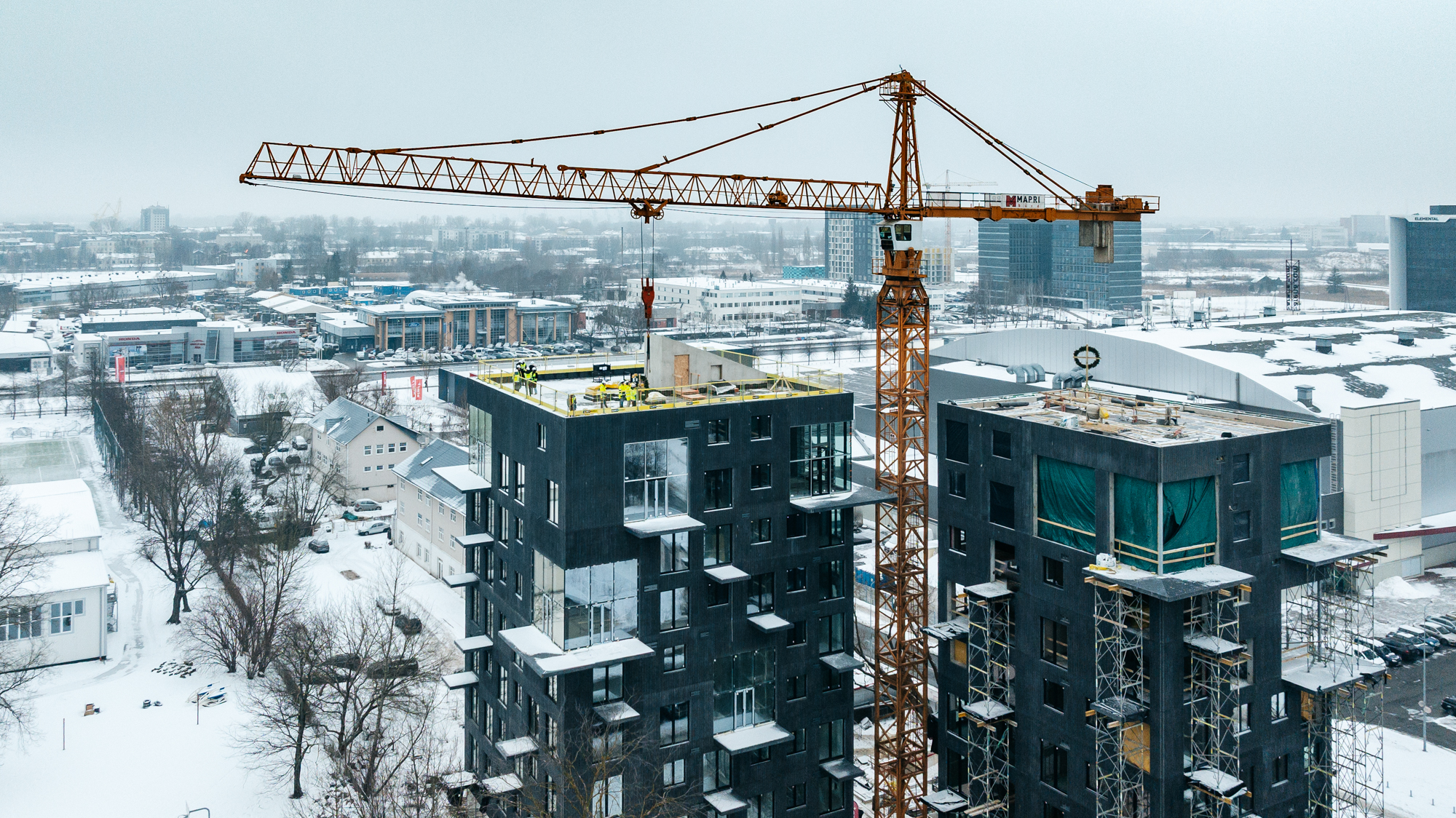
Infrastructure is already in place. Four new streets and engineering networks built with EU co-financing. This is not "planned for the future" — it's built and operational.
Rail Baltica effect. The new central station — directly adjacent to Skanste — will connect Riga to Tallinn, Vilnius, and Warsaw. Construction is underway. Investropa projects 8–15% price increases in the Rail Baltica zone once infrastructure completes.
Corporate tenant demand. Skanste attracts embassy staff, corporate relocations, and IT professionals. Well-positioned rentals are filled within 1–2 weeks. Young professionals pay €650–950/month for a 1-bedroom apartment here.
Coordinated development. The Skanste Development Agency — an association of the district's major developers and property owners (Capitalica, Linstow Baltic, Merko, and others) — coordinates development to prevent chaotic construction. This institutional framework is unusual for Riga and reduces planning risk for investors.

What specific projects are being built in Skanste right now?
Five major residential projects are underway simultaneously in 2025–2027, with combined investment exceeding €100 million and over 800 new apartments.
Arena Garden Towers (Merko mājas)
Four 13-storey buildings, ~400 apartments total. Stage 1 (84 apartments, Arēnas St 1): completion summer 2026, 80% already sold. Stage 2 (80 apartments, Arēnas St 3): completion early 2027. Price: €2,601–3,510/m². Energy class A. First project in Latvia using energy pile technology for ground-source heating/cooling.
Skanstes Rezidences (Invego + Reterra)
67 premium apartments. Investment: €14 million. Completion: H1 2026. Approximately one-third already reserved. Nordic design, long-term quality focus.
Heart of Hanza (LNK Properties)

127 apartments (45–350 m²) at Hanzas St 3b — precisely between the Art Nouveau quarter and Skanste's business zone. Total investment: €35 million. By November 2025, ~50% reserved or sold. Price: €3,100–4,200/m² (floor-dependent). A+ energy class, autonomous ventilation with heat recovery.
New Hanza Apartments (New Hanza Development + Pillar Development)

258 apartments in four buildings on Gustava Kluča St. Construction started October 2025. Completion: late 2027. Building A price: €2,950–4,023/m². Buildings B and C pricing announced Q2 2026. Solar panels on all roofs, gated courtyard of 2,400 m².
What is the rental yield and how to calculate it?
Latvia's average gross rental yield in 2025 was 7.89% — one of the highest in the EU. Range: 4.29% (premium) to 9.86% (budget). Average 1-bedroom rent in Riga: ~€600/month. In Skanste and the centre, young professionals pay €650–950/month.
Budget example: apartment bought for €60,000, rented at €420/mo → 8.4% gross
Skanste example: new-build bought for €180,000, rented at €850/mo → 5.7% gross + projected 6–10% annual capital appreciation
Net yield after taxes, insurance, maintenance, and vacancy: typically 4–6%. In Skanste, lower current yield is offset by significant capital appreciation potential. Rental listings in Skanste fill within 1–2 weeks; peak demand: August–September.
What taxes and fees should you know about?
Latvia's property tax system is relatively simple: annual property tax 0.2–1.5% of cadastral value, capital gains tax 20%, and rental income tax at either a flat 10% or progressive 20/33%.
| Tax type | Rate | Notes |
|---|---|---|
| Property tax (residential) | 0.2–0.6% | Of cadastral value. Declaring residence = lower rate. |
| Property tax (commercial) | up to 1.5% | Municipality sets exact rate. |
| Capital gains tax | 20% | Exempt for primary residence or reinvestment. |
| Rental income tax | 10% (flat) or 20/33% | 10% = simplified, no expense deductions. 20% = with deductions. |
| Land Registry fee | 2% of cadastral value | One-time at registration. |
| Notary | €150–500 | Mandatory for every transaction. |
| VAT (new builds) | 21% | Already included in developer's price. |
2026 reforms: Cadastral values are being aligned closer to market values. Municipalities have greater autonomy. E-address registration required by January 1 to qualify for discounts. Property owners can contest cadastral assessments. Note: Latvian cadastral values remain well below market prices, so actual tax bills are often surprisingly low compared to what foreign investors expect.
How to finance your first investment?
Average mortgage rate in early 2026: ~4.3% (variable: margin 2.2% + 6-month EURIBOR 2.1%). Banks finance up to 85% of property value for up to 30 years.
Main banks: Citadele, SEB, Luminor. Special terms for energy-efficient buildings (A+/A class — lower margins). ALTUM state guarantee up to €20,000 available for certain buyers. Multi-child families get dedicated programs at Citadele through end of 2026.
Practical tip: Apply at multiple banks — margin differences can save thousands over the loan term. Get pre-approval before selecting a specific property.
What are the key risks?
Four main risk factors: demographics, geopolitics, cadastral reform, and liquidity.
Demographics. Latvia's population is declining. Mitigation: invest in Riga or the Riga metro area where urbanization and remote-worker inflows sustain demand. Skanste specifically attracts international professionals.
Geopolitics. Latvia's proximity to Russia affects some investor sentiment. Facts: EU and NATO membership provides a security framework. In 2025, domestic investors made up a record 72% of the market. Latvia attracted a record €1.01 billion in new investments.
Cadastral reform. Annual tax may increase. Mitigation: declare residence (0.2–0.6% vs 1.5%), register e-address, contest assessment if it exceeds market value.
Liquidity. Selling takes months. Mitigation: maintain a 6-month financial buffer. Invest in districts with stable demand (Centre, Skanste, Teika).
Riga district comparison for investors

| District | New-build price (€/m²) | Projected annual growth | Rental demand | Investor profile |
|---|---|---|---|---|
| Skanste | 2,600–4,200 | 6–10% | High (corporate, expats) | Long-term appreciation + rent |
| Centre / Quiet Centre | 2,900–7,000 | 3–5% | High (diplomats, tourists) | Premium, lower liquidity |
| Teika | 2,000–2,800 | 5–8% | Stable (families) | Steady long-term growth |
| Āgenskalns | 1,800–2,500 | 5–9% | Rising (young professionals) | Value potential play |
| Jugla / Imanta | 1,800–2,200 | 10–14% | Stable (budget) | High yield, low entry barrier |
| Rail Baltica zone | varies by project | 8–15% (post-completion) | Medium (short-term) | More speculative, high potential |
Practical steps for beginner investors
Before searching for property — define your strategy: goal (rental, resale, personal), budget, time horizon.
1. Define your budget and down payment capacity (15–20%).
2. Research the market: Cenu Banka (transaction data), VZD (official database), Latio.lv (analysis), ARCO Real Estate (monthly reports).
3. Consult three professionals: property appraiser, notary, tax consultant.
4. Get bank pre-approval before selecting a property.
5. Calculate ALL costs: purchase + notary + Land Registry + renovation + monthly maintenance + taxes.
6. For Skanste specifically, visit skanste.lv (Development Agency), newhanza.lv, heartofhanza.lv, and skanste.merkomajas.lv for current availability and pricing.
Frequently asked questions about real estate investment in Latvia
Can foreigners freely buy property in Latvia?
Yes, EU/EEA citizens can freely purchase residential and commercial property. Non-EU citizens face restrictions on agricultural and forest land. An investment of €250,000+ qualifies for a temporary residence permit (Golden Visa).
What is the minimum budget?
Regions: from €20,000–30,000. Riga (standard): from €40,000–60,000. Skanste (new builds): from ~€135,000. Down payment: 15–20%.
Why Skanste and not the Centre or Old Town?
Centre and Old Town prices are higher (up to €7,000/m²) but appreciation potential is lower — these are "mature" markets. Skanste is in a growth phase with new infrastructure, and its projected 6–10% annual growth exceeds the Centre's 3–5%.
Standard apartments or new builds — which is better for investment?
Standard apartments offer higher gross yields (7–10%) but need renovation. New builds yield less (4–6%) but offer stable appreciation, lower maintenance, and A+ energy class reduces tenant utility costs.
What are the main costs beyond the purchase price?
Notary (€150–500), Land Registry fee (2% of cadastral value), property appraisal (€100–300), insurance (~€100/year), possible renovation. Property management: 7–10% of monthly rent.
How will the 2026 cadastral reform affect investors?
Cadastral values are being aligned to market prices, which may increase annual tax. However, Latvian cadastral values remain well below market, so actual tax bills are still surprisingly low compared to most EU countries. Owners can contest assessments.
What tax rate applies to rental income?
You can choose the simplified 10% flat rate (no expense deductions) or register a business at 20% with expense deductions. In practice, the 10% flat rate is simpler and often more favourable.
How quickly can you rent out an apartment in Skanste?
Well-positioned rentals in Skanste and the centre typically fill within 1–2 weeks. Peak rental period: August–September. Corporate tenants and expats are the primary demand source.
Where to find reliable market data?
Cenu Banka (transaction data), VZD (official database), ARCO Real Estate (monthly reports), Latio.lv (analysis & valuations), Investropa.com (district-level forecasts), Skanste.lv (district development news).