

Last updated: March 2026
Latvia's Baltic Sea coastline stretches over 500 km — from wide Blue Flag beaches to dramatic cliff coasts and wild nature reserves. This guide covers the 9 best beaches in Latvia, offering everything from family-friendly resorts to untouched wilderness and unique geological formations.
Contents:
What are the most popular beaches in Latvia?
Jūrmala, Liepāja, and Ventspils are Latvia's three main beach destinations, each holding Blue Flag certification and offering developed infrastructure, restaurants, and activities for all ages. From resort elegance to wind-sports energy, each has its own distinct character.
Jūrmala — Latvia's famous seaside resort
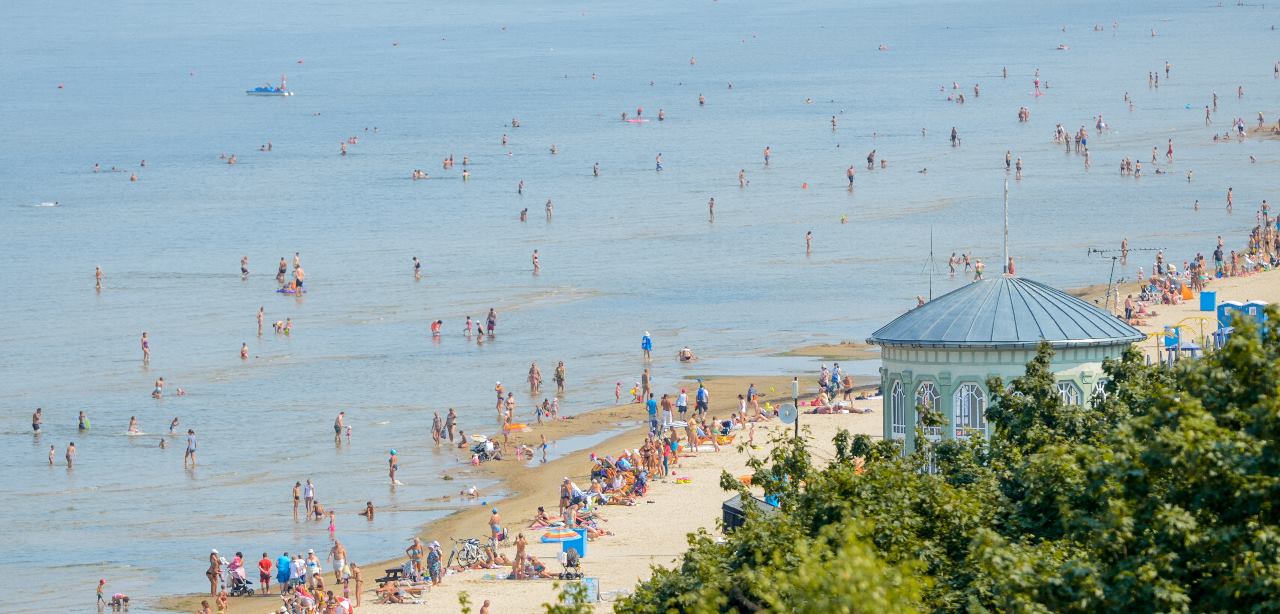
Just 25 km from Riga, Jūrmala is Latvia's largest resort town. Its 33 km white sand beach runs along the Gulf of Riga, with shallow, calm water that's safe for children. The most popular area is Majori — home to the Blue Flag beach, boardwalk cafés, sports courts, and wooden walkways.
Dzintari attracts visitors with its legendary concert hall and quieter atmosphere. For even more solitude, head to Lielupe or Vaivari where crowds thin and dunes grow taller. Jūrmala also borders Ķemeri National Park, where the famous Great Ķemeri Bog boardwalk trail awaits.
Getting there: train from Riga Central Station (30 min, ~€2). Cars require a Jūrmala entry permit in summer.
Liepāja Blue Flag beach
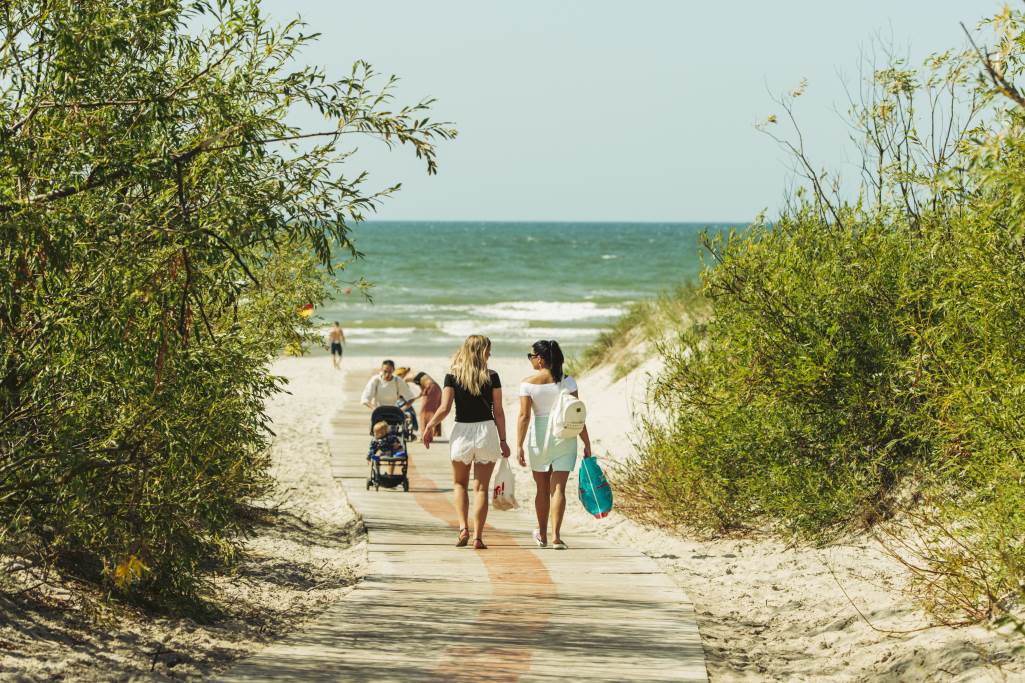
Liepāja boasts one of Latvia's widest beaches — up to 80 m wide and 8 km long. It has held Blue Flag status since 2001. Liepāja was the first beach in Latvia adapted for visitors with mobility and vision impairments, equipped with audio buoys and accessible facilities.
Known as "the city where the wind is born," Liepāja's strong southwest winds attract kitesurfers and windsurfers. After storms, amber pieces wash ashore. The adjacent Seaside Park (3 km long) offers walking trails, playgrounds, and summer cafés. Don't miss Karosta and the Northern Forts.
Getting there: bus from Riga (3.5–4 h, ~€12–15). By car — via A9 (~300 km).
Discover adventure activities in Latvia →Ventspils beach — perfect for families
Ventspils Blue Flag Beach
Blue Flag certified since 1999. Fine white sand, up to 80 m wide shore, and dunes reaching 9 m. Access via wooden boardwalks — each entrance marked with an animal symbol so children can easily find their way back.
📍 visitventspils.com · Free entry
Ventspils is one of Latvia's most family-friendly cities. The beach features playgrounds, volleyball and football courts, drinking water stations, and cafés. Next door you'll find the Beach Waterpark with slides and pools, plus an Adventure Park with obstacle courses and a toboggan track.
The city is famous for its 28 painted cow sculptures created by different artists. Also worth visiting: the Seaside Open-Air Museum and the narrow-gauge railway "Mazbānītis."
Getting there: bus from Riga (~2.5–3 h, ~€10–14). By car — via A10 (~190 km).
Which beaches are closest to Riga?
Saulkrasti and its White Dune are reachable in 50 minutes from Riga — ideal for a day trip when you want the sea without a long drive. The area features one of Latvia's most beautiful coastal trails.
Saulkrasti and the White Dune
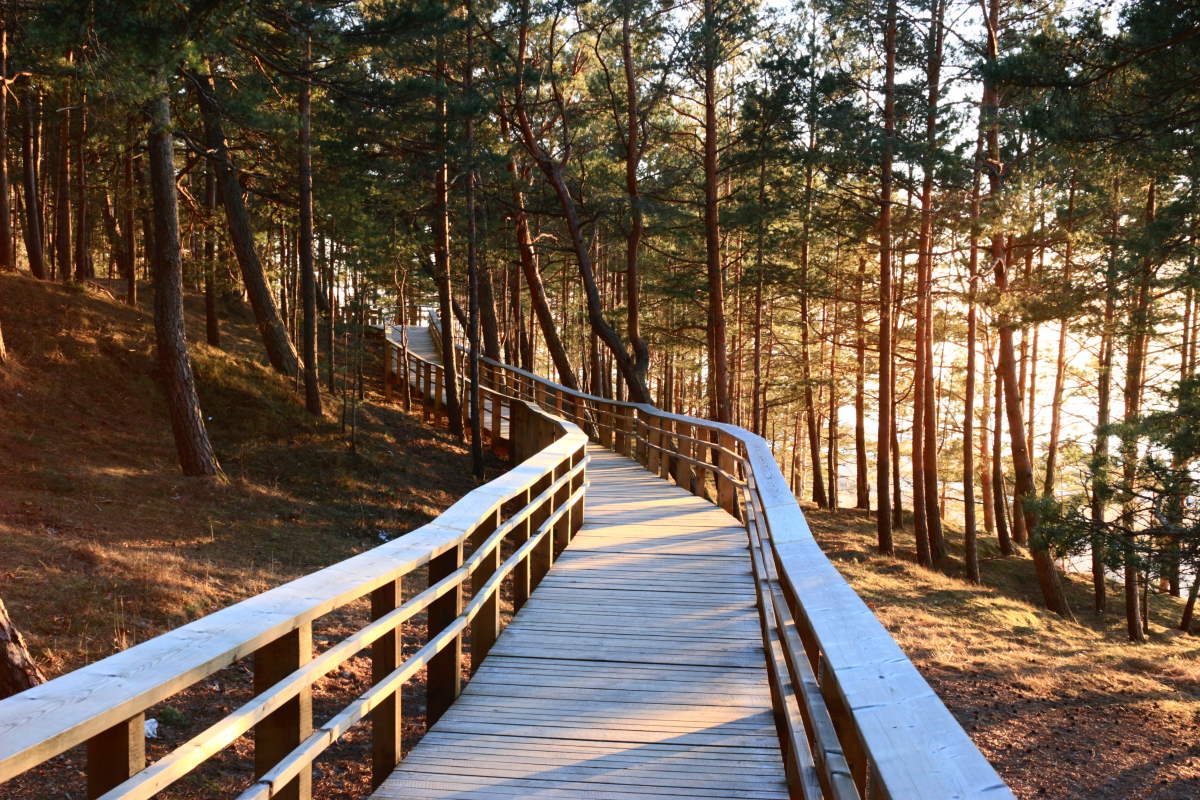
The White Dune (Baltā kāpa) is one of Latvia's most scenic coastal dunes. From its top, you get sweeping views of the sea, and nearby begins the Sunset Trail — a 3.5 km coastal walking path to Pēterupe, equipped with wooden boardwalks and viewing platforms.
Saulkrasti's beach is sandy and peaceful — far quieter than Jūrmala. Lifeguards operate in summer, and changing cabins are available. The surrounding pine forests are great for walking and cycling.
Getting there: train from Riga (~50 min, ~€2.50). By car — via A1 (~50 km).
What are the most unique beaches in Latvia?
Latvia's coastline is remarkably diverse — from the point where two seas collide, to 20-metre-high cliff coasts and red sandstone formations. These beaches offer experiences you won't find on typical sandy shores.
Cape Kolka — where two seas meet
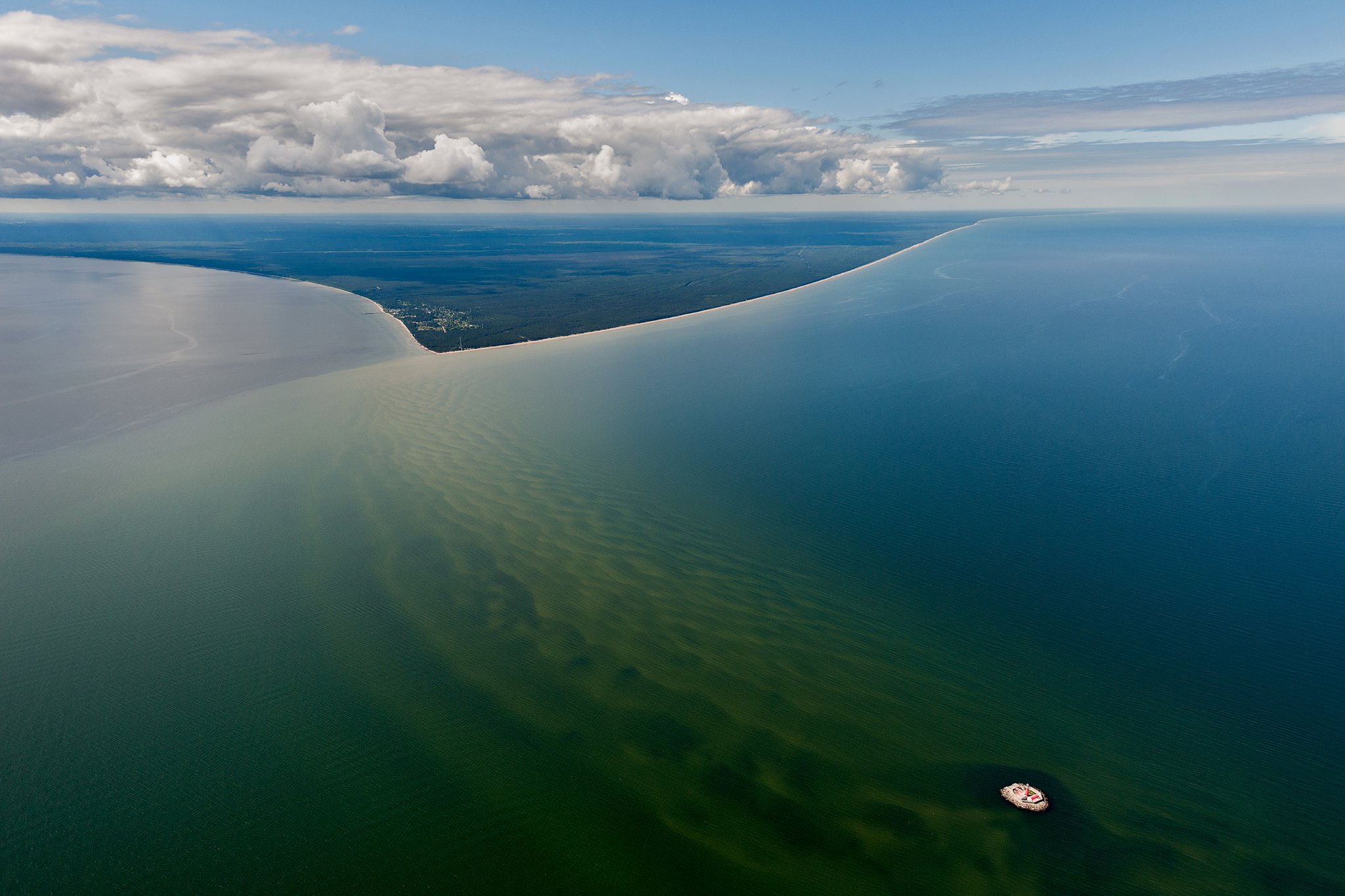
Cape Kolka (Kolkasrags) is Latvia's most prominent cape, where the Baltic Sea meets the Gulf of Riga. You can watch waves from two bodies of water crash into each other — a striking natural spectacle. Sunken ships in the waters off the cape attract divers.
Warning: strong currents make swimming dangerous here. However, Cape Kolka is an excellent birdwatching spot, especially during spring and autumn migrations. Nearby trails wind through pine-forested dunes, and you can buy fresh smoked fish from local vendors.
Getting there: by car via P131 through Slītere National Park (~170 km from Riga). Public transport is limited.
Jūrkalne sea cliffs
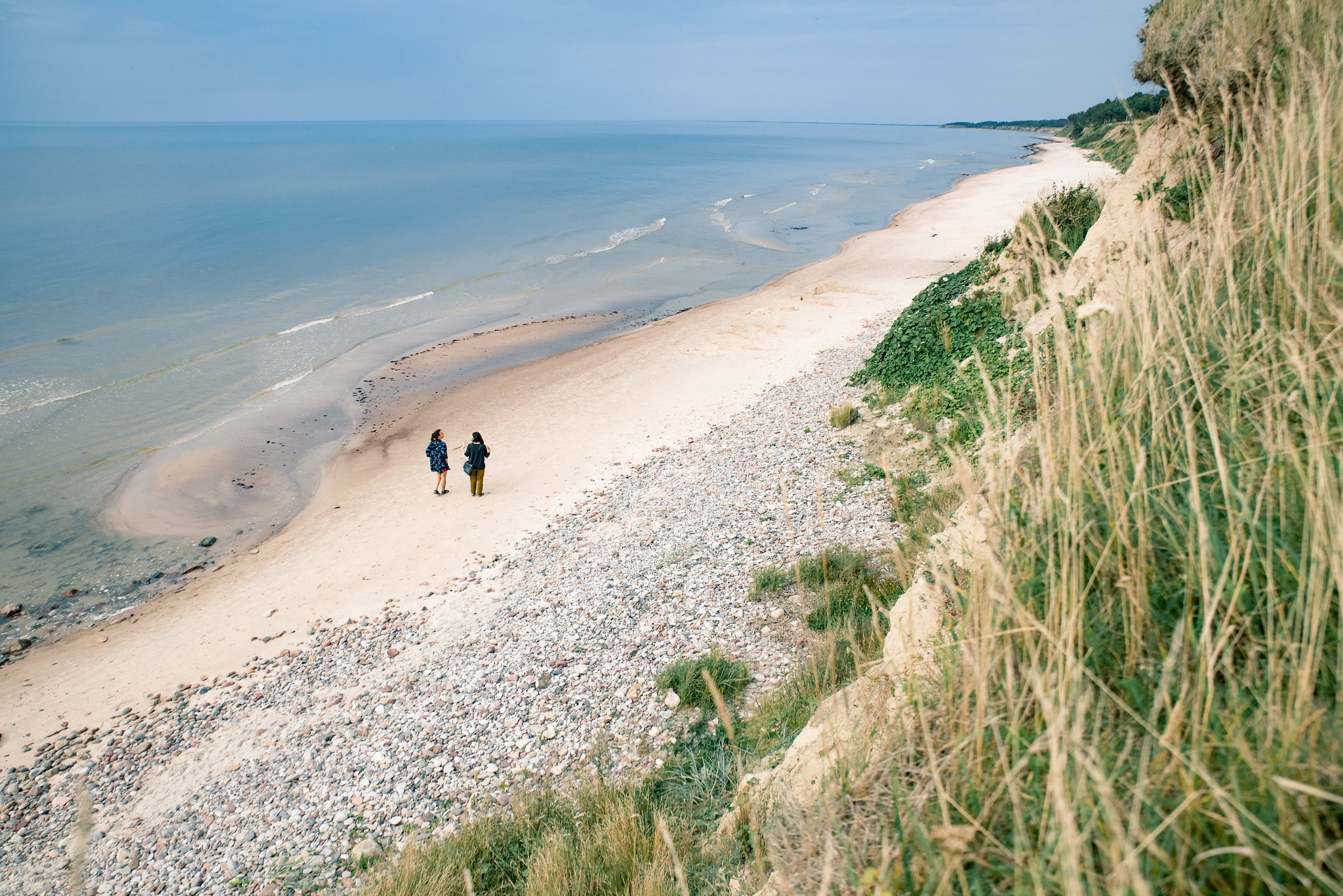
Jūrkalne's steep coast is one of Latvia's most dramatic shoreline sections — cliffs reaching up to 20 m drop straight into the sea. Here you can experience "two sunsets" — first from the beach below, then moments later from the clifftop above.
The stretch from Strante to Ulmale is particularly spectacular and suitable for paragliding. In summer, wild orchids bloom on the lower slopes. This is Latvia at its wildest — virtually no infrastructure, so bring your own food and water.
Getting there: by car via P111 between Pāvilosta and Ventspils (~230 km from Riga).
Veczemju Cliffs — red sandstone coast
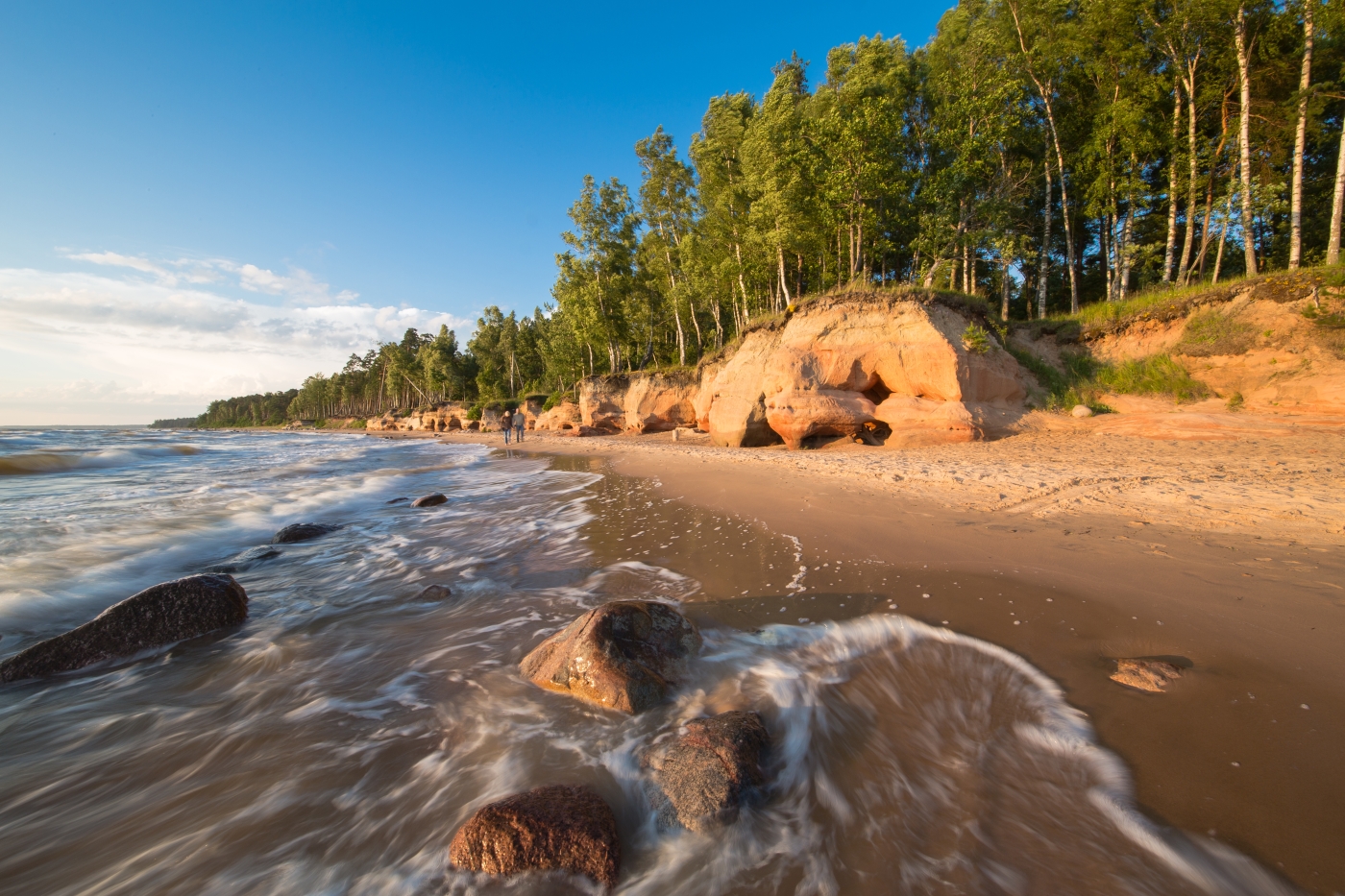
Veczemju Cliffs are the most impressive sandstone cliff formations on the Vidzeme coast — a steep bluff up to 6 m high with shallow erosion caves, niches, and grottos. The red sandstone colour creates particularly photogenic scenery, especially in sunset light.
The wider Vidzeme rocky coast stretches for 12 km between Tūja and Vitrupe — it's the only coastal section in Latvia with sandstone outcrops and is part of a protected nature reserve.
Getting there: by car via A1 and P10 (~80 km from Riga, ~1.5 hours).
Kaltene rocky beach
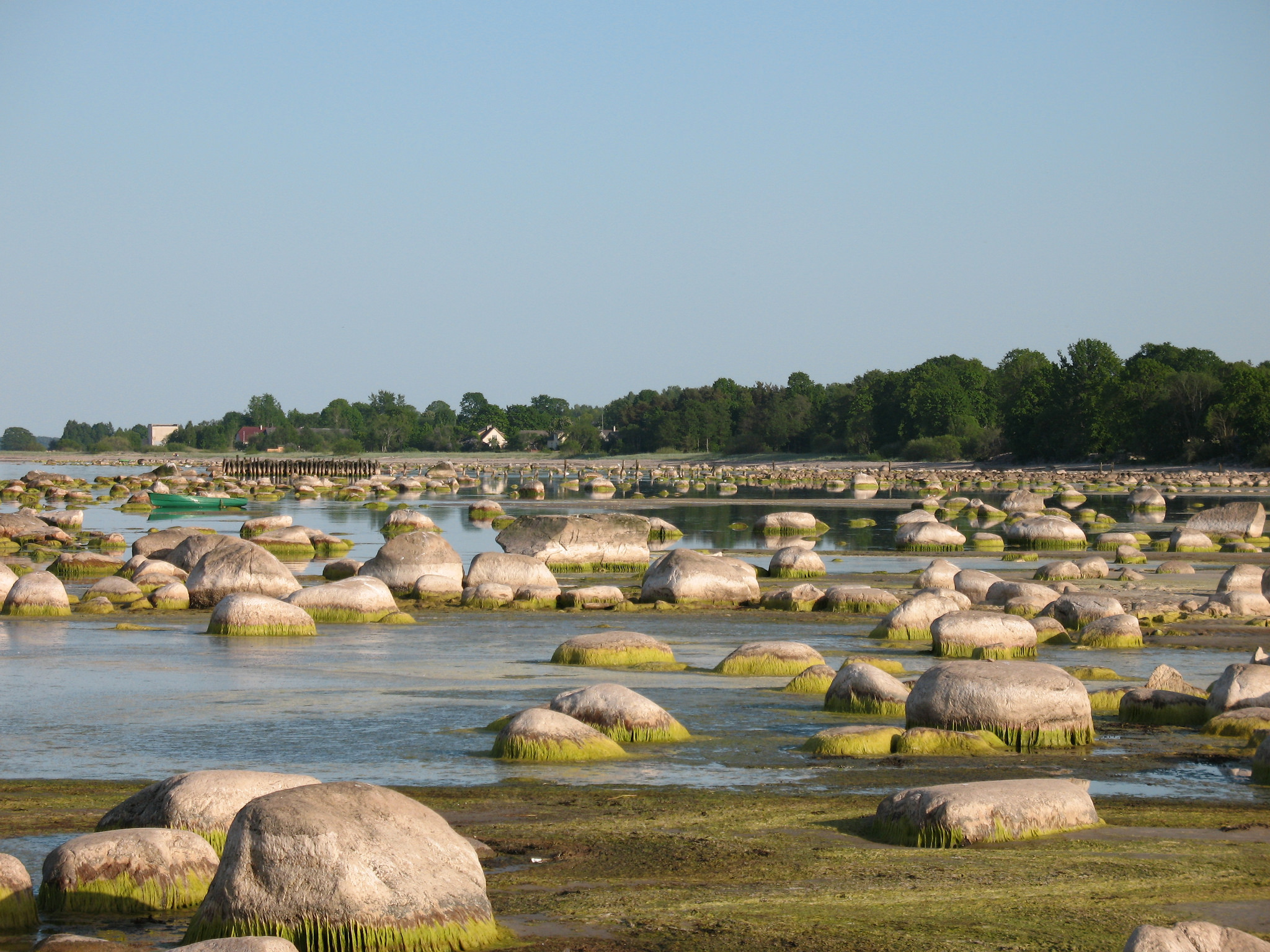
Kaltene's beach is completely different from every other beach in Latvia — it's covered in massive boulders, creating a landscape you'll rarely see elsewhere on the Latvian coast. The beach is home to one of Latvia's largest sea boulders.
In summer, sunlight reflects beautifully off the stones; in winter, they're decorated with ice formations. Nearby, the Kaltene nature trail leads through forest to a birdwatching tower. The area is quiet and uncommercialized.
Getting there: by car via P131 towards Kurzeme (~110 km from Riga).
Where to find wild beaches in Latvia?
Pape Nature Park in Latvia's southwest corner offers a completely wild coastal experience — no infrastructure, but wild horses, aurochs, and undisturbed nature.
Pape Nature Park
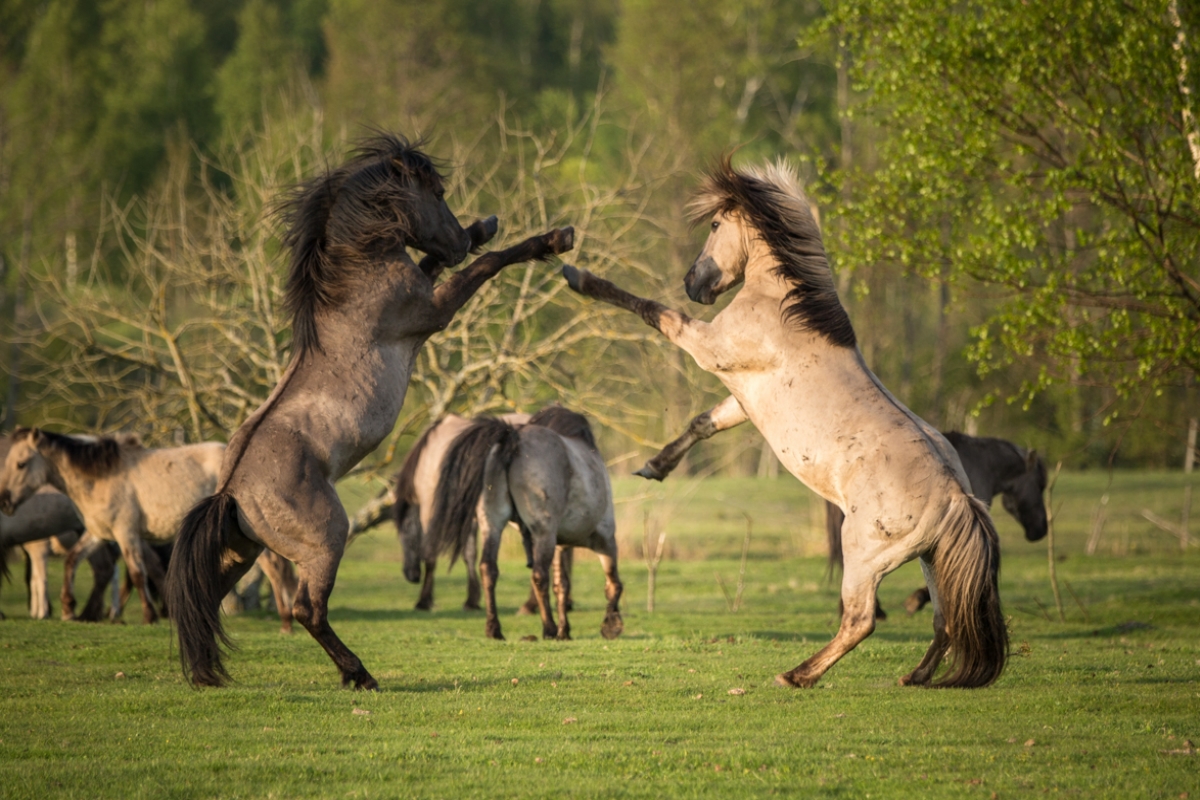
Pape Nature Park features unique natural ecosystems — Baltic Sea coast with dunes, Lake Pape, Nīda raised bog, and wild animals. The floodplain meadows are grazed by wild horses and aurochs (European bison descendants).
The beach here is completely wild — no lifeguards, no cafés, no boardwalks. That's exactly why it attracts those seeking genuine peace and closeness to nature. Pack a picnic basket — there are no shops nearby.
Getting there: by car via A11 south of Liepāja (~330 km from Riga). Public transport is practically non-existent.
Comparison table
| Beach | Distance from Riga | Blue Flag | Best for | Unique feature |
|---|---|---|---|---|
| Jūrmala (Majori) | 25 km (30 min) | Yes | Families, resort life | 33 km of beach, Art Nouveau villas |
| Liepāja | 300 km (3.5 h) | Yes (since 2001) | Active beach, kitesurfing | Up to 80 m wide, amber hunting |
| Ventspils | 190 km (2.5 h) | Yes (since 1999) | Families with children | Waterpark and adventure park nearby |
| Saulkrasti | 50 km (50 min) | No | Day trips, romance | White Dune, 3.5 km Sunset Trail |
| Cape Kolka | 170 km (2.5 h) | No | Nature lovers, photographers | Two seas collide, bird migration |
| Jūrkalne | 230 km (3 h) | No | Adventurers | 20 m sea cliffs, "two sunsets" |
| Veczemju Cliffs | 80 km (1.5 h) | No | Photographers, nature trails | Red sandstone cliffs with caves |
| Kaltene | 110 km (1.5 h) | No | Quiet relaxation, nature | Massive boulders on the beach |
| Pape | 330 km (4 h) | No | Wilderness seekers | Wild horses and aurochs |
What else to try in Latvia?
Already in Latvia and looking for something even more thrilling than a beach day? Try freefall from 4,000 metres. A tandem skydive is an experience you can gift yourself or someone you care about.
Tandem skydive
The jump takes place at Limbažu Airfield (~1 hour from Riga). Strapped to a certified instructor, you freefall for approximately 60 seconds at speeds around 200 km/h. Price: €239. Photo and video: +€70. No prior experience needed — minimum age 16 (with parental consent) or 18.

Oxygen Jump — highest tandem in Eastern Europe
Want even more adrenaline? The Oxygen Jump from 5,500 m is the highest civilian tandem jump in Eastern Europe. Supplemental oxygen masks, ~90 seconds of freefall at ~220 km/h. Price: €490.

Gift cards
All Skydive Latvia services are available as gift cards from €30. Gift cards have no expiration date — buy now, use anytime. An ideal gift for birthdays, anniversaries, or anyone who dreams of flying.
Get a gift card →Frequently asked questions
When does beach season start in Latvia?
The official swimming season typically runs from early June to mid-September. The warmest water temperatures occur in July and August, reaching 20–23°C. Lifeguards are on duty at major beaches from June through September.
Which is the best beach for children in Latvia?
Ventspils and Jūrmala (Majori) are best suited for families — shallow water, playgrounds, lifeguards, and nearby attractions. Ventspils additionally offers a waterpark and adventure park.
Can you find amber on Latvian beaches?
Yes, especially after storms. The best spots for amber hunting are Liepāja and Pāvilosta beaches. Be careful not to confuse amber with white phosphorus, which can look similar but is dangerous.
Are all Latvian beaches free to visit?
Yes — all beaches in Latvia are public and free. The only fee may be the Jūrmala city entry charge for cars during summer and parking fees at some locations.
What is the best time to visit Latvian beaches?
July and August are the warmest months with air temperatures of 20–25°C. June and September are quieter with fewer tourists, though water can be cooler.
Is the Baltic Sea safe for swimming?
Major beaches have lifeguards and safety flags during summer. However, avoid swimming in stormy weather and at Cape Kolka, where currents are strong. Always check the warning flags on lifeguard towers.
Are dogs allowed on Latvian beaches?
Dogs are generally not permitted on Blue Flag beaches during the season. However, many wild beaches (Cape Kolka, Pape, Kaltene) have no such restrictions. Always check local rules.
Where is the best surfing spot in Latvia?
Liepāja and Pāvilosta are the most popular for kitesurfing and windsurfing, thanks to strong southwest winds. Equipment rental and instructors are available at both locations during summer.
What's an original gift for someone who loves Latvia's nature?
A skydive with views of Latvia's coastline and forests. Skydive Latvia offers tandem jumps (€239) and Oxygen Jump from 5,500 m (€490). Gift cards have no expiration date.
