

Updated: March 2026 | Last verified: March 2026
Skiing in the Alps is no longer a distant dream for Latvians — direct airBaltic flights from Riga to Innsbruck, Salzburg, Geneva, and Verona mean you can leave Latvia in the morning and stand on a real Alpine slope by afternoon. A week of skiing in the Alps realistically costs between ~€1,100 and €2,500 per person from Latvia, depending on the resort, accommodation, and timing. This guide covers everything you need to plan your first (or next) trip — from flights and budgeting to resort selection and preparation tips.
- Why ski in the Alps specifically?
- How do you get to the Alps from Riga?
- How much does a week of skiing in the Alps cost?
- Which resorts are best for beginners and families?
- Which resorts suit experienced skiers?
- How should you prepare for your first Alps trip?
- What can you do in the Alps besides skiing?
- Where to find adrenaline when the snow melts?
- Alpine resort comparison table
- Frequently asked questions
Why ski in the Alps specifically?
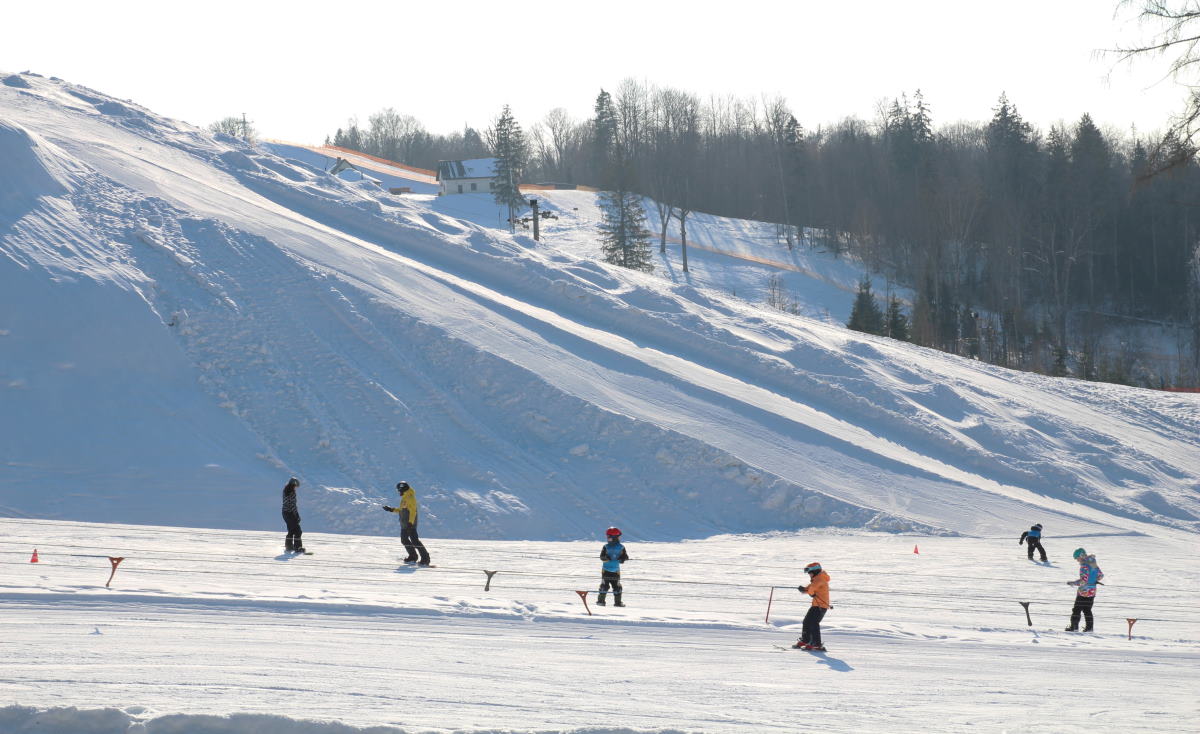
The Alps offer what Latvia's gentle hills physically cannot — slopes from 2,000 to 3,800 metres altitude, hundreds of kilometres of interconnected runs, and guaranteed snow from December through April. The longest run in Latvia (at Riekstukalns near Riga) is roughly 500 metres. In the Alps, a single descent can stretch 10–16 km. It is a fundamentally different experience.
Altitude guarantees a stable snowpack all season — many resorts stay open into April and even May. The sheer variety of terrain means you will never get bored during a week-long trip, because every day brings a new area to explore. Alpine resorts also feature professional ski schools, top-quality rental equipment, and infrastructure built over decades of winter tourism.
Then there is the après-ski culture — mountain restaurants, thermal spas, nightlife, and the chance to combine active holidays with cultural experiences in cities like Innsbruck, Salzburg, or Verona.
How do you get to the Alps from Riga?
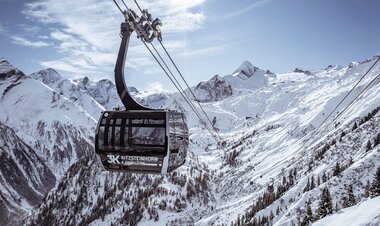
Getting from Riga to the Alps takes approximately 2–3 hours on direct airBaltic flights. During the winter season (December–March), airBaltic offers direct service to several Alpine gateway cities, with additional options via connections.
Riga → Innsbruck (Austria) — weekly flights, ~2h 40min
Riga → Salzburg (Austria) — weekly flights, ~2h 30min
Riga → Geneva (Switzerland) — weekly flights, ~3h
Riga → Verona (Italy) — weekly flights, ~2h 20min
Riga → Munich (Germany) — regular flights, ~2h 20min
Riga → Vienna (Austria) — regular flights, ~2h 15min
Riga → Zurich (Switzerland) — regular flights, ~2h 45min
Best booking strategy: airBaltic runs regular sales (January and August), when tickets to Alpine destinations are available from ~€100–150 return. The best prices tend to fall outside school holiday periods — early January and late March. Book at least 2–3 months ahead.
Airport to resort. Most Alpine resorts are a 1–2 hour drive from the nearest airport. Popular options include shuttle buses (~€30–60 one way), car rental (~€30–50/day, winter tyres recommended), or train (Austria and Switzerland have excellent rail connections). From Innsbruck airport, free or low-cost ski buses run to many nearby resorts.
Discover adventure activities in Latvia →
How much does a week of skiing in the Alps cost?
The total budget for a week of skiing from Latvia averages €1,100 to €2,500 per person, though budget-conscious travellers can do it for less. The biggest expenses are accommodation, ski pass, and flights — in that order.
| Expense | Budget | Mid-range | Premium |
|---|---|---|---|
| Flights (return) | €100–150 | €150–250 | €250–400 |
| Accommodation (7 nights) | €250–400 | €500–800 | €1,000+ |
| Ski pass (6 days) | €250–320 | €320–400 | €400–500 |
| Equipment rental (6 days) | €80–120 | €120–180 | €200+ |
| Airport–resort transfer | €30–50 | €50–80 | €80–150 |
| Food & drinks | €150–250 | €250–400 | €500+ |
| TOTAL (7 days) | €860–1,290 | €1,400–2,100 | €2,400+ |
Where to save the most? Three key strategies: (1) book a self-catering apartment instead of a hotel — save ~40% on food by cooking breakfast and dinner; (2) choose a resort with lower ski pass prices — smaller Austrian resorts offer day passes from €48, while Switzerland can exceed CHF 90; (3) travel outside peak season — early January and late March are significantly cheaper for both flights and accommodation.
Ski pass prices by country (2025/2026 season): Austria averages €48–83 per day. Italy ranges €50–86 (Dolomiti Superski ~€86). France runs €42–82. Switzerland charges CHF 65–97 (~€65–100). Austria offers the best value from Latvia — direct flights, lower prices than Switzerland, and an excellent range of resorts.
Which resorts are best for beginners and families?
If you are skiing for the first time or travelling with children, choose a resort with spacious beginner zones, a quality ski school, and a calm atmosphere. The best beginner resorts are accessible directly from Innsbruck and Salzburg airports, both served by direct flights from Riga.
Serfaus-Fiss-Ladis (Tyrol, Austria)
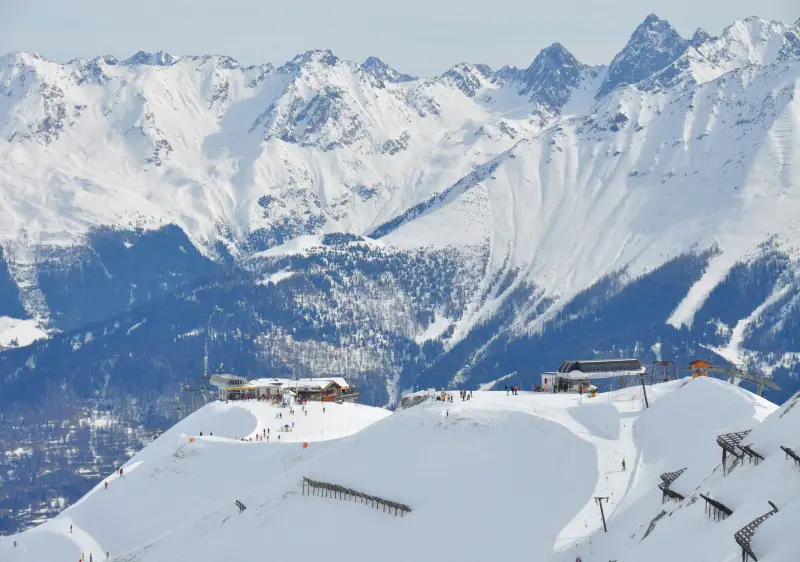
One of Europe's top family resorts. Cars are practically banned from the villages — they park at the entrance. Slopes are in an accessible bowl at the edge of the village, and the altitude (1,200–2,820 m) ensures reliable snow. Excellent children's ski schools and dedicated kids' zones. 6-day ski pass: ~€340. From Innsbruck airport: ~1.5 hours.
Ellmau — SkiWelt (Tyrol, Austria)
A quiet family resort between Innsbruck and Salzburg with access to one of Austria's largest interconnected ski areas — SkiWelt (284 km of runs). Great beginner zones, friendly atmosphere, and a wide range of accommodation. 6-day ski pass: ~€310. From Innsbruck or Salzburg: ~1 hour.
Zell am See — Kaprun (Salzburg region, Austria)

A superb combination — a lakeside town with mountain views and slopes reaching 3,029 m altitude (Kitzsteinhorn glacier). Suits beginners and intermediate skiers alike. Excellent family hotels and plenty of off-slope activities. 6-day ski pass: ~€330. From Salzburg airport: ~1.5 hours.
Kronplatz / Plan de Corones (South Tyrol, Italy)
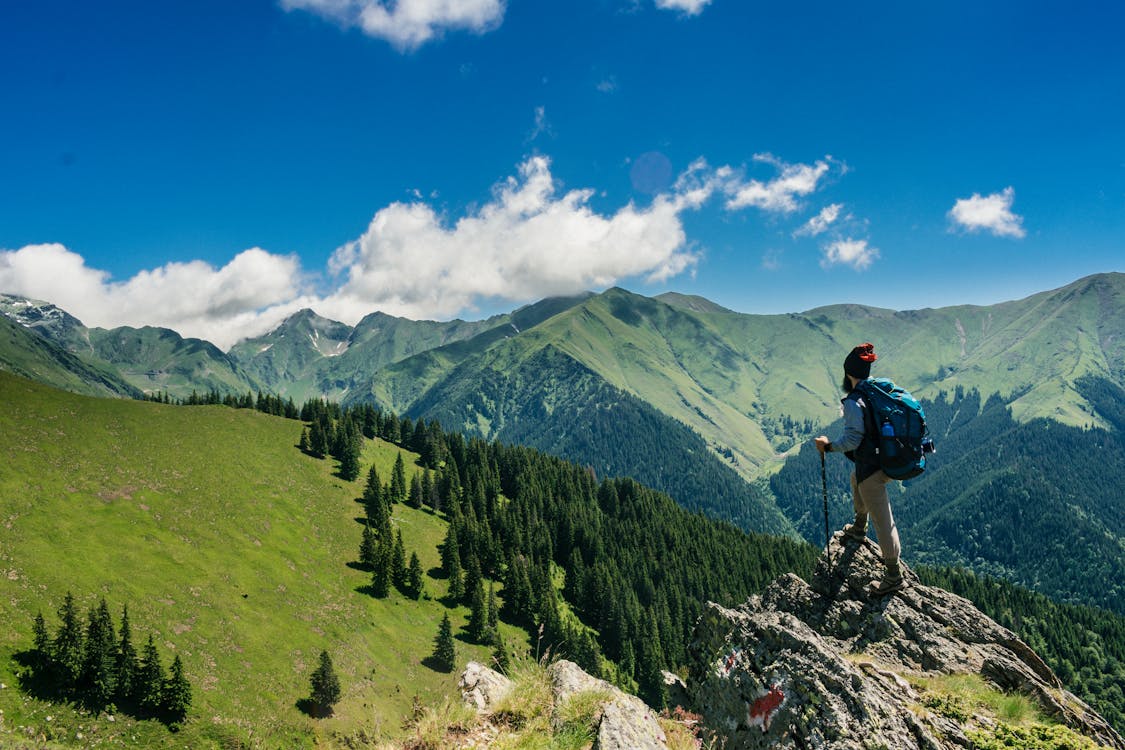
In the Dolomites region, accessible from Verona. Wide, sun-drenched slopes with excellent infrastructure. Outstanding Italian cuisine in mountain restaurants. Ideal for beginners and intermediate skiers. 6-day ski pass (Dolomiti Superski): ~€370. From Verona: ~2.5 hours.
Which resorts suit experienced skiers?
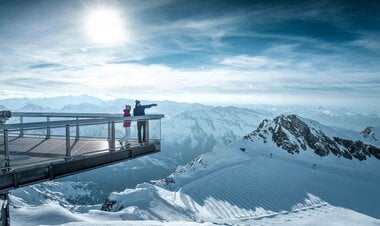
For experienced skiers, the priorities are run length, vertical drop, off-piste potential, and overall ski area size. The largest resorts in Austria and France offer 200–600 km of interconnected runs — enough to discover something new every day.
St. Anton am Arlberg (Tyrol, Austria)
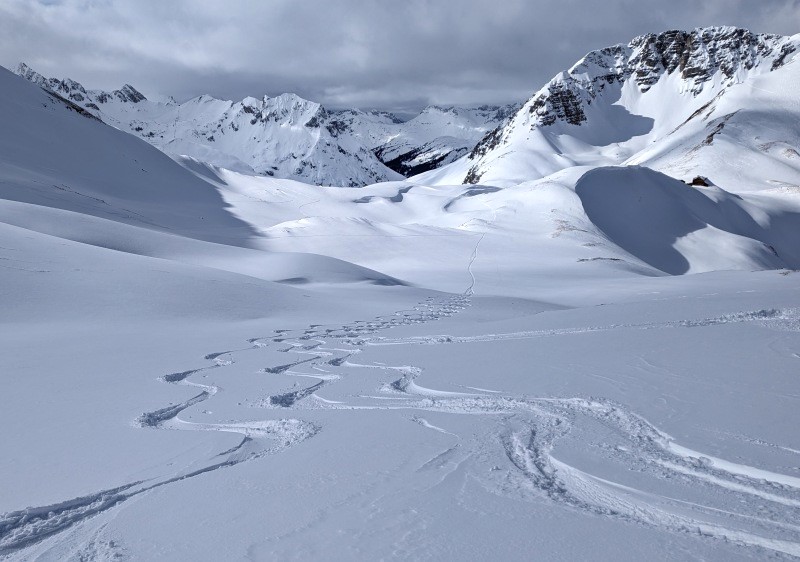
A legendary resort with 305 km of runs, including demanding black pistes and exceptional off-piste terrain. Famous for its après-ski culture. 6-day ski pass: ~€370. From Innsbruck: ~1.5 hours.
Ischgl / Silvretta Arena (Tyrol, Austria)

A modern, dynamic resort with 239 km of runs, including cross-border skiing into Switzerland (Samnaun). Popular nightlife and superb infrastructure. The season often lasts into early May. 6-day ski pass: ~€370. From Innsbruck: ~2 hours.
Chamonix-Mont Blanc (France)
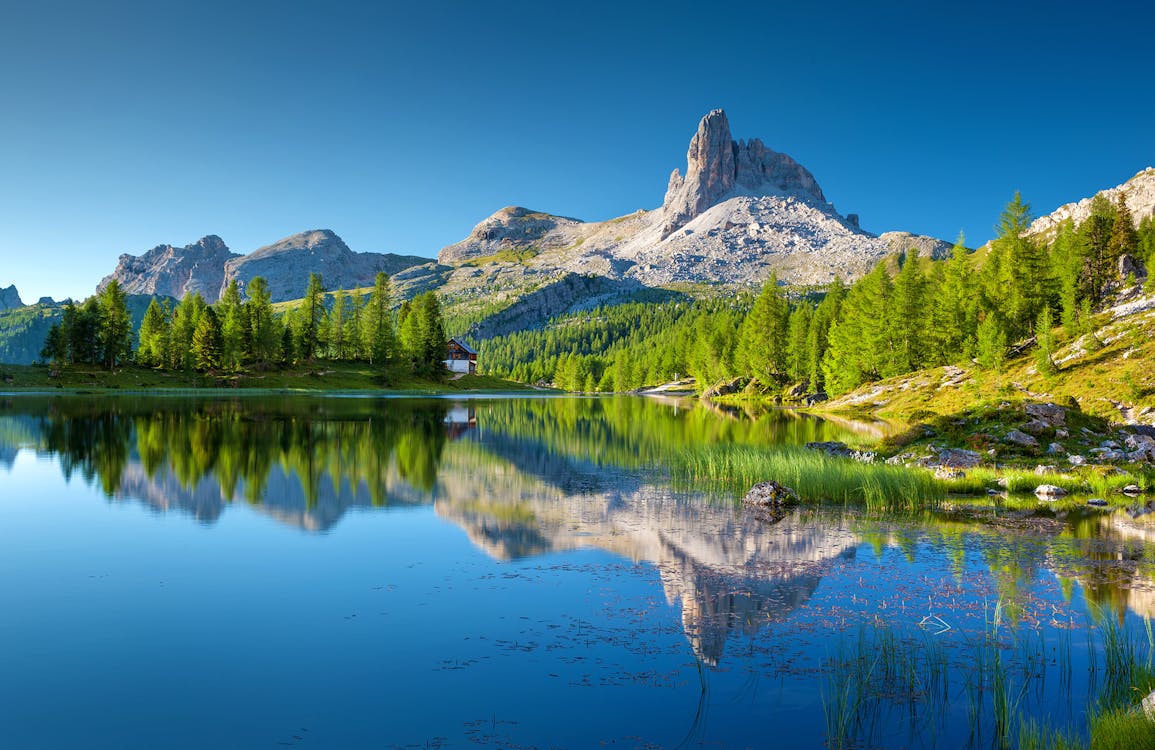
A legendary mountain resort at the foot of Europe's highest peak, offering impressive off-piste skiing and 155 km of groomed runs reaching 3,842 m altitude (Aiguille du Midi). Famous for steep terrain and the Vallée Blanche — one of the world's most iconic off-piste routes. Accessible from Geneva airport (~1.5 hours — closer than any other major French resort). 6-day ski pass: ~€330.
Val Gardena — Dolomiti Superski (Italy)
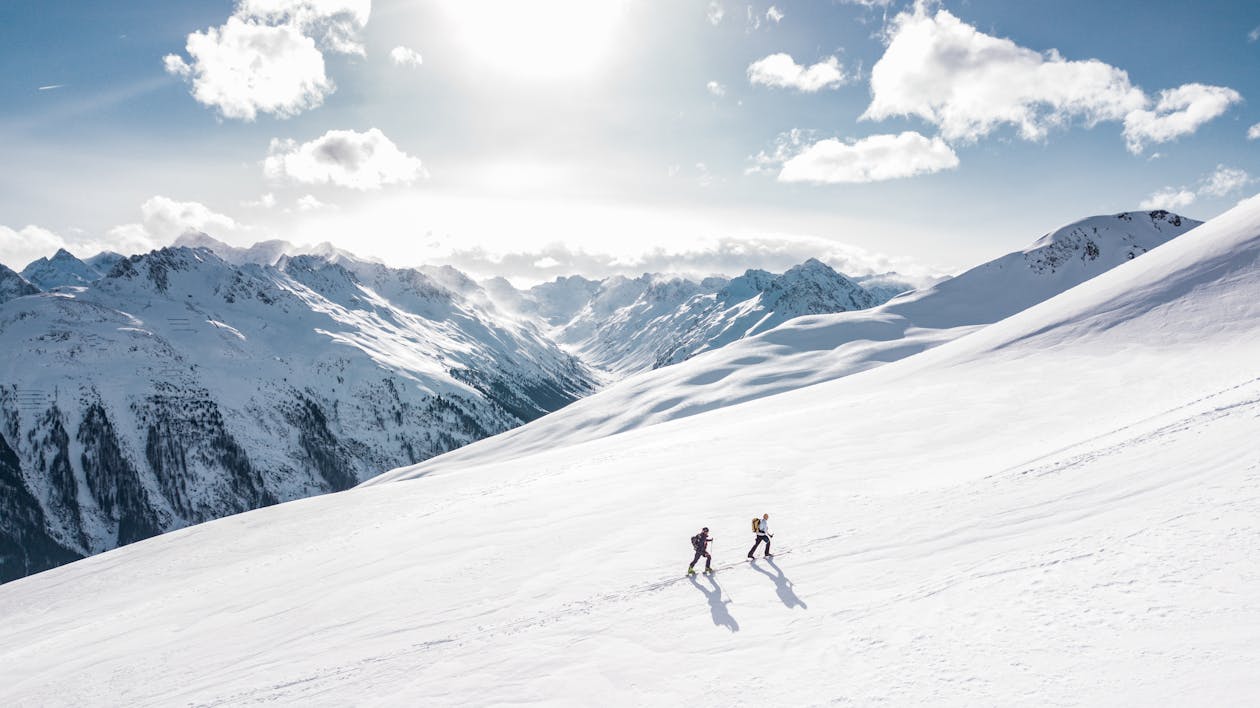
Breathtaking Dolomite landscape with 1,200 km total across the Dolomiti Superski area. The famous Sella Ronda — a 40 km circular route. UNESCO World Heritage scenery. 6-day ski pass: ~€370. From Verona: ~2 hours.

When the ski season ends, the adrenaline continues — tandem skydive from 4,000 m in Latvia. Learn more →
How should you prepare for your first Alps trip?
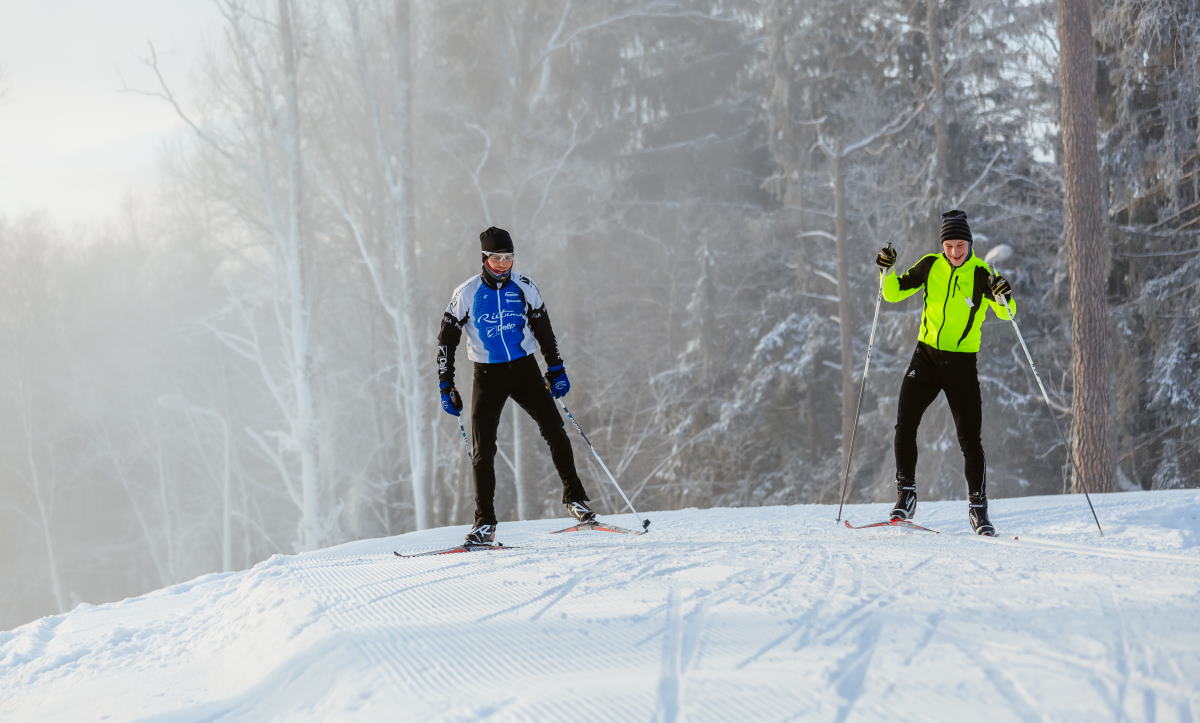
Your first trip to the Alps requires a bit more planning than a typical holiday, but with proper preparation, even a complete beginner can enjoy Alpine slopes from day one. The key is not to rush and to choose a resort that genuinely fits your needs.
Equipment — rent or buy?
For your first trip, rent everything at the resort. Skis, boots, poles, and helmets cost ~€15–30 per day for a full set. Buying new equipment starts at €500+, and without slope experience you will not know what you actually need. Exception: if you already ski in Latvia and own gear, bring it along — most airlines allow skis as sports luggage (airBaltic charges ~€35 one way).
Clothing
Mountain weather changes fast. Layering is essential: thermal base layer, fleece or wool mid-layer, and waterproof/windproof outer layer (ski jacket and pants). Gloves, goggles, sunglasses, and high-SPF sunscreen are musts — UV radiation at altitude is significantly stronger than at sea level.
Ski school
If you have never skied Alpine slopes before, a group lesson for the first 2–3 days is the best investment you can make. Cost: ~€40–70 per day (group) or ~€150–250 for a private lesson. Most resorts offer English-language instruction. After 2–3 days with an instructor, you will be able to handle blue (intermediate) runs independently.
Insurance
Travel insurance with winter sports cover is essential. Standard travel policies often exclude skiing injuries. Check that yours covers: mountain rescue services (helicopter evacuation can cost €5,000+), treatment abroad, and repatriation. In Latvia, most major insurers offer this — typically €15–40 per week.
What can you do in the Alps besides skiing?
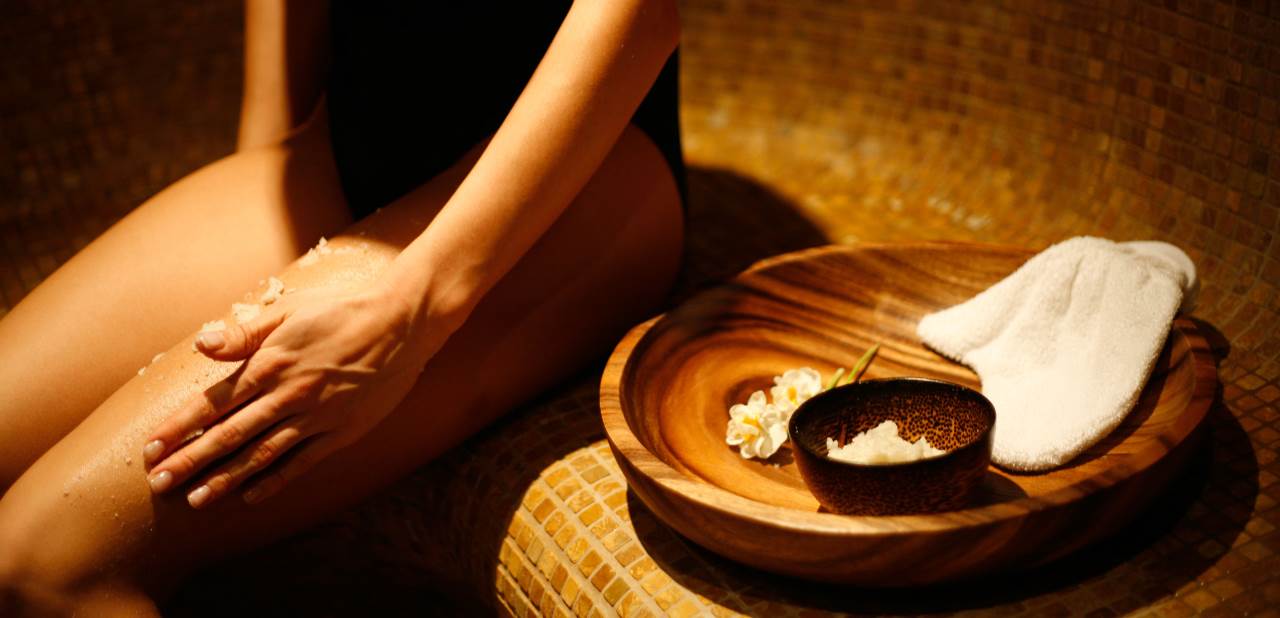
Alpine resorts offer far more than slopes. Even if someone in your group does not ski, they will not be bored — off-slope activities are equally engaging.
Thermal spas and pools. Nearly every major resort has a thermal complex. Aqua Dome in Ötztal (Austria), Felsentherme in Bad Gastein, or QC Terme in the Dolomites — perfect recovery after a day on the slopes.
Winter hiking and snowshoeing. Many resorts maintain marked winter hiking trails and snowshoe routes — a wonderful way to enjoy mountain scenery without skis.
Toboggan runs. Mountain toboggan tracks can stretch 3–10 km and are a fantastic adventure for the whole family.
Culture and gastronomy. Innsbruck offers museums, a historic old town, and world-class restaurants. Salzburg is Mozart's city with opera and festivals. Verona has Shakespeare's Juliet's balcony and the Roman amphitheatre. Swiss towns offer chocolate and cheese tastings.
Where to find adrenaline when the snow melts?
Many people who discover mountain adrenaline through skiing look for similar thrills in summer. Latvia offers a surprisingly wide range of extreme activities available from April through October — and some of them surpass even Alpine skiing in terms of raw adrenaline.
One of the most intense experiences is skydiving. A tandem jump from 4,000 m altitude with ~60 seconds of freefall at ~200 km/h is a fundamentally different adrenaline hit than skiing. For an even more intense option, the Oxygen Jump from 5,500 m with supplemental oxygen masks is the highest civilian tandem jump in Eastern Europe (~90 seconds of freefall, ~220 km/h). The season in Latvia runs from April to October — precisely when Alpine skiing ends.
See our full guide to adventure activities in Latvia to plan your next experience.

Alpine resort comparison table
| Resort | Country | Piste km | Day pass | Level | Direct from RIX |
|---|---|---|---|---|---|
| Ellmau / SkiWelt | Austria | 284 km | ~€62 | Beginners, families | Innsbruck / Salzburg |
| Serfaus-Fiss-Ladis | Austria | 214 km | ~€68 | Beginners, families | Innsbruck |
| Zell am See-Kaprun | Austria | 138 km | ~€65 | Beginners–intermediate | Salzburg |
| St. Anton / Arlberg | Austria | 305 km | ~€82 | Experienced | Innsbruck |
| Ischgl / Silvretta | Austria | 239 km | ~€79 | Experienced | Innsbruck |
| Kronplatz | Italy | 119 km | ~€76 | Beginners–intermediate | Verona |
| Val Gardena | Italy | 175 km | ~€76 | Intermediate–advanced | Verona |
| Chamonix-Mont Blanc | France | 155 km | ~€65 | Intermediate–advanced | Geneva |
Ski season over, but the adrenaline cravings are not?
Book a tandem skydive — €239 →Gift cards with no expiration date — available from €30
See also our complete guide to the best ski resorts — including Latvia, Baltic, and budget European options.
Frequently asked questions
How far in advance should I book flights to the Alps?
Aim for 2–3 months ahead. The best prices appear during airBaltic sales (January and August), when return tickets to Innsbruck or Salzburg start at around €100.
Can I ski in the Alps if I have never skied before?
Absolutely. Alpine resorts have excellent ski school programmes, and after 2–3 days with an instructor most people ski blue runs independently. Choose a beginner-friendly resort with plenty of gentle green zones.
What is the minimum budget for a week of skiing from Latvia?
A realistic minimum is ~€900–1,100 per person if you choose a budget Austrian resort, stay in an apartment, cook your own meals, and catch a flight sale. Average spending is €1,500–2,000.
Should I rent or buy ski equipment?
For your first 2–3 trips, rent — it lets you try different ski types and find what suits you. On-resort rental costs ~€15–30 per day for a full set. If you ski more than 10 days per season, buying starts to pay off.
Which country offers the best value for Latvian skiers?
Austria delivers the best price-to-quality ratio: direct flights from Riga, ski pass prices lower than Switzerland (~€48–83 vs CHF 65–97), a wide choice of resorts, and excellent infrastructure. Italy's Dolomites are a strong alternative via direct flights to Verona.
When is the best time to go skiing in the Alps?
The season runs December through April. Best snow is typically January–February. Cheapest periods are early January (after New Year holidays) and late March. School holidays (Christmas, February half-term) are the most expensive and crowded times.
Is travel insurance mandatory for skiing?
Not legally, but practically yes. Mountain rescue services can cost €3,000–10,000 (helicopter evacuation). Travel insurance with winter sports cover costs ~€15–40 per week — an investment that could save thousands.
Do children get discounts at Alpine resorts?
Yes. Most Austrian resorts offer free ski passes for children under 6. Children aged 6–15 typically receive 40–50% discounts. Many resorts offer family pricing, and in some Austrian regions children born in 2020 or later ski for free.
What adrenaline activities are available in Latvia in summer?
Latvia offers tandem skydiving (from €239, with freefall from 4,000 m), Oxygen Jump from 5,500 m (€490), bobsled in Sigulda, Aerodium wind tunnel, kitesurfing in Pāvilosta, wakeboarding, and much more. Gift cards with no expiration date are available from €30.
