

Glider flight in Latvia is available in three distinct forms: with a true sailplane (motorless aircraft), a hang glider, or a paraglider. All three cost between €45 and €75 for an introductory flight, last 7–20 minutes, and offer very different sensations — from silent soaring high above the fields to active wind-driven flight along a sea cliff. This guide explains the differences, shows where each option is offered in Latvia, and helps you pick the right one for your first try.
- What exactly is a glider flight?
- Flying with a real sailplane in Latvia — where to try it
- Hang glider flight over Riga — the Spilve option
- Paraglider tandem flight — Adrenalīns and Up We Go
- How much it costs and which option to choose
- Safety in the air — what beginners need to know
- Preparation: clothing, weather, what to bring
- When 10 minutes isn't enough — skydiving as the next step
- Frequently asked questions
What exactly is a glider flight and how does it differ from a hang glider and paraglider?
Before booking, it helps to know the actual differences.
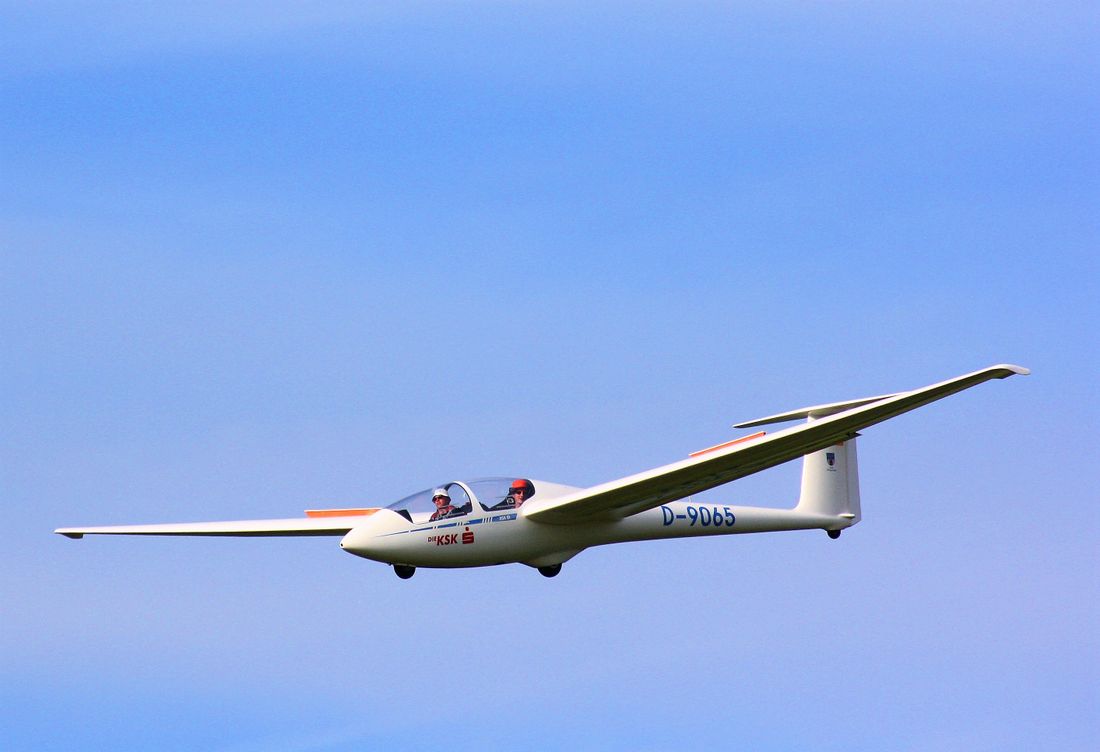
A sailplane is a fixed-wing motorless aircraft that looks like a small plane with no engine. It's towed into the air by a tug aircraft or winch, then soars using thermals (columns of warm air rising from the heated ground) and dynamic wind currents. A sailplane can stay aloft for hours and cover hundreds of kilometres in a single flight.
A hang glider is a triangular fabric wing on a rigid frame. The pilot hangs below the wing in a harness and controls flight by shifting body weight. In Latvia, it's commercially available mostly as a powered hang glider (motodeltaplāns) — equipped with a small engine that handles takeoff and provides stable flight.
A paraglider uses a soft fabric wing that resembles an elongated parachute. It's the slowest and most portable of the three — the entire kit fits in a single backpack. Passenger flights are always tandem with an instructor.
| Aircraft | Wing type | Speed | For beginners |
|---|---|---|---|
| Sailplane | Rigid, fixed | 80–200 km/h | Tandem with pilot |
| Hang glider (powered) | Rigid, triangular | 40–120 km/h | Tandem with instructor |
| Paraglider | Soft, fabric | 25–60 km/h | Tandem — best entry point |
Latvia historically had a strong sailplane scene — Cīrava airfield in Kurzeme was one of the largest gliding centres in the Soviet-era Baltic region. In 2010, most Blanik L-13 training sailplanes were grounded across European airspace, which effectively killed organised club gliding in Latvia. Today the planieru community is small but active — the best starting point for context is the portal gliding.lv.
Flying with a real sailplane in Latvia — where to try it
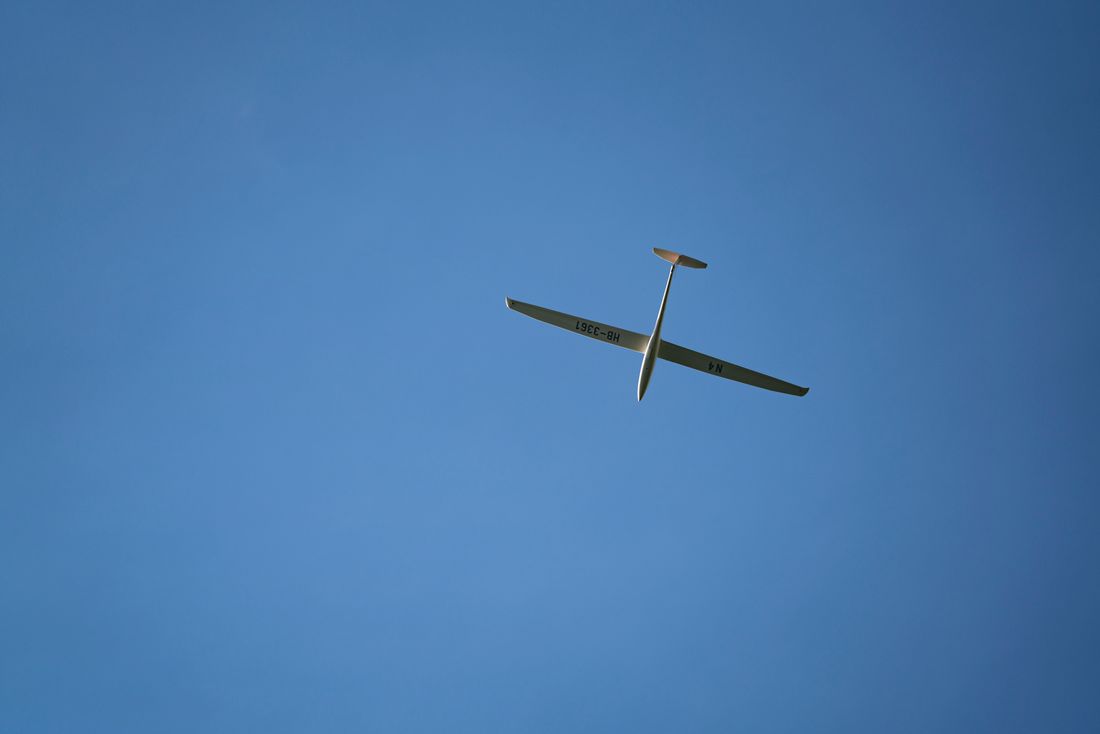
Cīrava airfield (ICAO: EVIA) sits beside the Durbe river, 2 km from Cīrava village. It has two 800-metre runways — one concrete, one grass. Historically it was the base of the Yuri Gagarin-named Kurzeme aero club, with a strong sailplane department. The first self-built gliders flew here in May 1950.
The airfield is currently used by Kurzemes Avioklubs for leisure flights with motor-gliders and skydiving training. To book a flight, you contact the club directly — they help match you with an available pilot for your preferred date.
What a typical sailplane (or motor-glider) flight in Latvia looks like:
- Tow by aircraft or winch to 300–1000 metres altitude
- Cable release — free soaring or motor-off gliding begins
- Flight duration 15–30 minutes (depending on thermals)
- Brief chance to try the controls under pilot supervision
- Prices individual — from approximately €70–120 for an introductory flight
Season — April/May to October. If you want to dig deeper into the sport itself, the Gliding.lv FAQ is the best starting point in Latvia.
Hang glider flight over Riga — the Spilve option
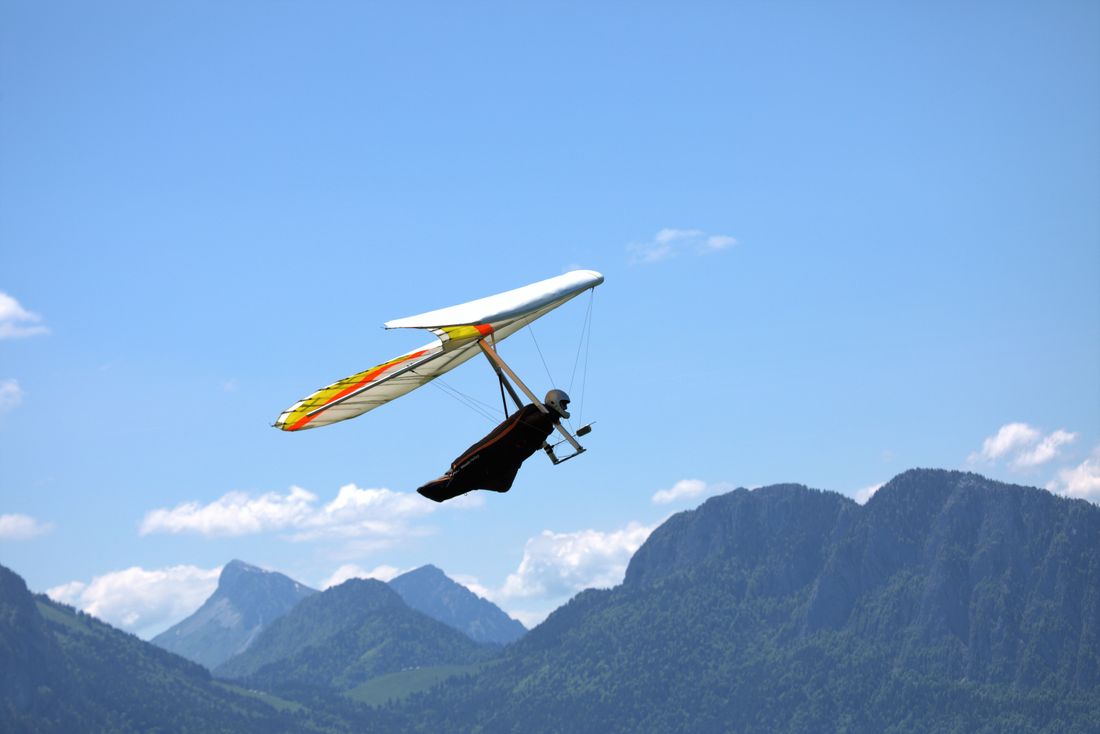
This is the most accessible glider-type flight near Riga, because the airfield is right inside the city and the session is short and budget-friendly. Technically it's a motorised hang glider — a triangular-framed wing with a small engine for controlled takeoff. You sit in an open cockpit just behind the pilot, wind in your face, and Riga unfolds directly below.
What to expect from a 15-minute flight over Riga:
- Pre-flight briefing on the ground (5–10 min)
- Takeoff from Spilve's grass runway
- Flight over the Daugava river, Old Town, Ķīpsala island, and the Gulf of Riga shoreline
- Pilot-shot photos available immediately after landing
Practical information: Maximum passenger weight 110 kg. Season — spring through autumn, with a minimum air temperature of +10 °C. Children from 7 years old may fly under parental responsibility. Booking by phone +371 29252819 or via deltaspilve.lv.
Paraglider tandem flight — Adrenalīns and Up We Go
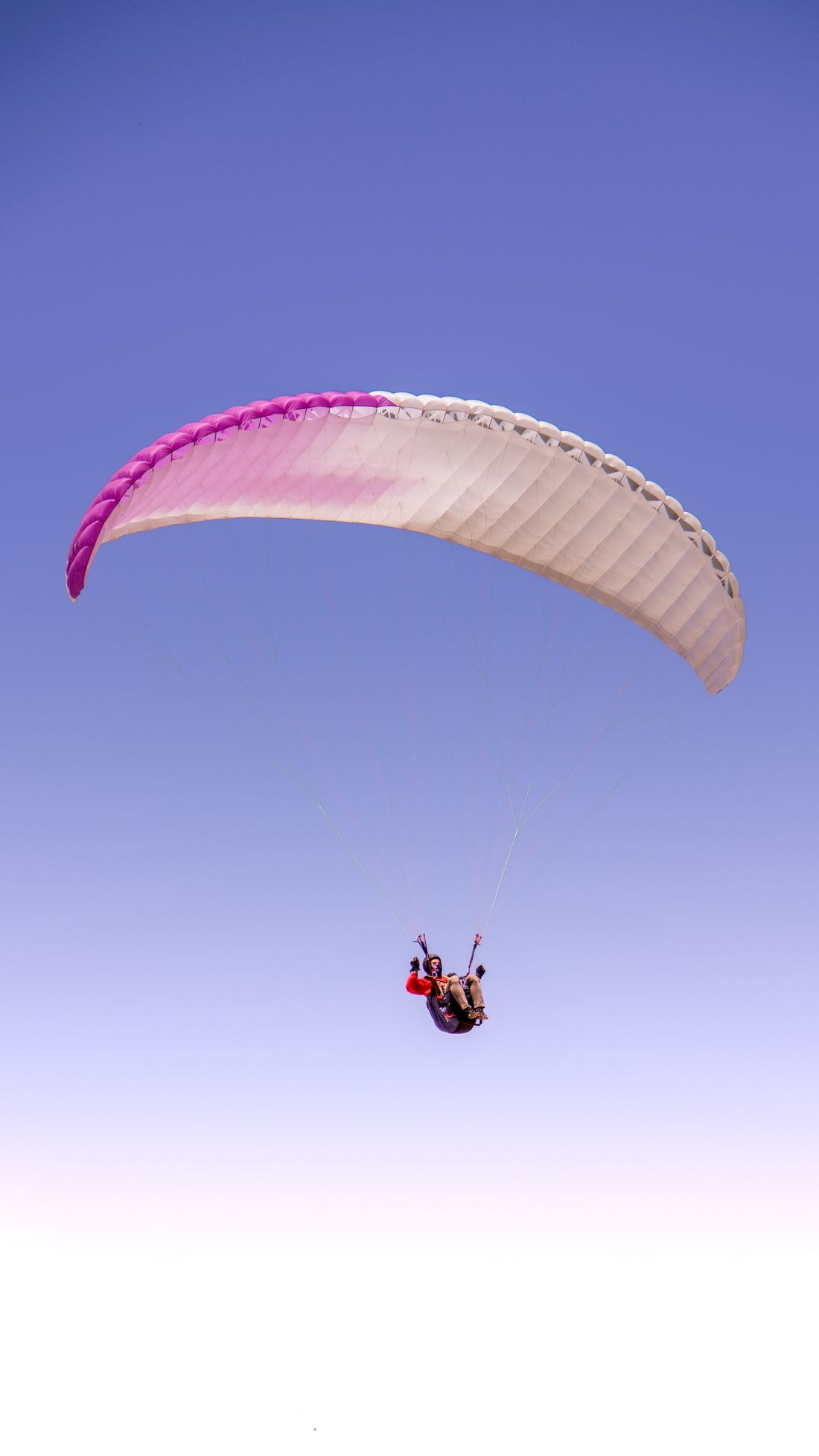
The club Adrenalīns has operated since 2000. During a tandem flight, the pilot and passenger are winched into the air via a cable up to 450 metres, then the cable is released and free soaring begins. The passenger needs to run about 10 metres at takeoff. The flight itself lasts 6–15 minutes — shorter and more thrilling with aerial manoeuvres, longer and calmer in a relaxed style.
Up We Go operates in a slightly different format — focused more on dynamic flights from coastal and hillside terrain, using wind reflection off elevated surfaces. Flight locations are picked based on wind direction: Jūrkalne cliff for north-westerly wind, Saulkrasti for easterly wind, Sigulda for the Gauja valley.
Key conditions:
- Weight limit 20–110 kg
- No real age limit — if you can run 10 metres, you can fly
- Children under 14 — written parental consent required
- Season March–October, with only rare winter flights
- Clothing: loose with long sleeves, sports shoes (not sandals)
A more in-depth overview of paragliding options and preparation is also available in the Skydive Latvia paragliding guide.
How much it costs and which option to choose
| Option | Location | Price | Duration | Altitude |
|---|---|---|---|---|
| Hang glider (powered) | Spilve, Riga | €45–60 | 10–15 min | up to 500 m |
| Paraglider (tandem) | Rumbula, Jūrkalne, Saulkrasti | €60–75 | 6–15 min | up to 450 m |
| Sailplane | Cīrava, Kurzeme | from €70 | 15–30 min | up to 1000 m |
| Tandem skydive | Limbažu airfield | €249 | ~60 sec freefall + 5 min canopy | 4000 m |
If you want a budget-friendly first experience right inside the city — Spilve hang glider. If you want a quiet, scenic flight over the sea or forest — paraglider tandem at Jūrkalne. If you're interested in the real gliding sport feel, with long motorless flight time — Cīrava sailplane (but plan ahead).
Safety in the air — what beginners need to know
Professional operators in Latvia work to European Union Aviation Safety Agency (EASA) requirements. Equipment is checked before every flight, instructors have an active license with annual confirmation, and a weather check is mandatory before each session.
Mandatory safety equipment in tandem flights:
- Certified helmet
- Harness system with redundant straps
- Protective clothing (depending on temperature)
- For paragliders — reserve parachute carried by the pilot
- Two-way radio between air and ground
The main risk factor for all three options is weather. Flights don't happen if wind exceeds 9 m/s, if a thunderstorm is forecast, or if visibility is poor. If the instructor cancels a session — that's good, not an inconvenience. An experienced pilot's refusal usually saves lives.
Preparation: clothing, weather, what to bring
Temperature drops noticeably with altitude — even in summer, at 300–500 metres the wind feels much cooler than on the ground, especially in a paraglider harness or open hang glider cockpit.
Preparation sequence:
- Confirm the flight the day before and again in the morning, since weather can change.
- Dress in layers — long sleeves, a light jacket layer, closed shoes with firm heels.
- Eat lightly — a heavy meal right before flight can cause discomfort in turbulence.
- Remove loose items — glasses, hats, scarves, loose phone holders can be lost at takeoff.
- Hydrate — bring a water bottle, wind exposure causes thirst quickly.
- Listen to the briefing — the pre-flight talk isn't a formality, it contains directions specific to that day.
Photos and video — most operators offer this as an add-on (€10–25). If you want to keep memories, request it at the booking stage, not on the spot.
When 10 minutes isn't enough — skydiving as the next step
Unlike a glider or paraglider flight, where you spend most of the time sitting and enjoying the view, skydiving starts with the actual freefall — air hits hard against your face, your body resists gravity, and only after a minute does the canopy open, turning the experience into a calm, controlled flight back to the ground.

Skydive Latvia operates from Limbažu airfield (~1 hour from Riga) — the only USPA and FAI certified skydiving centre in the Baltics. A tandem jump from 4000 m costs €249, including ~60 seconds of freefall and 5 minutes of canopy flight. A professional photo/video package — additional €89.
For those wanting the maximum experience, there's another option — Oxygen Jump from 5500 m with supplemental oxygen supply, the highest civilian tandem skydive in Eastern Europe. Freefall lasts ~90 seconds with a maximum speed of up to 220 km/h.

To see how such a jump looks from a camera perspective, here's a short video compilation from Skydive Latvia tandem jumps:
For more on different air sport options and how to pick the right one for you, see Adventure Activities in Latvia.
Frequently asked questions about glider flight in Latvia
How long does a typical glider flight in Latvia last?
Depends on the aircraft type. A hang glider flight at Spilve lasts 10–15 minutes, a paraglider tandem 6–15 minutes, while a real sailplane flight at Cīrava typically 20–30 minutes or longer depending on thermal conditions.
How much does a glider flight cost in Latvia?
Hang glider at Spilve — from €45 (10 min). Paraglider tandem — €63–75 (Adrenalīns at Rumbula). A real sailplane (motor-glider) at Cīrava — from €70, depending on operator and flight duration.
Is glider flight safe for beginners?
Yes, when operated by a certified instructor. Tandem flights are considered a safe experience because everything is managed by a professional with years of experience. The main risk factor is weather, and responsible instructors reschedule or cancel flights when conditions aren't suitable.
Where can I try a glider flight in Latvia?
Hang glider — at Spilve airfield in Riga (deltaspilve.lv). Paraglider — at Rumbula, Krustpils, Jūrkalne, Saulkrasti (adrenalins.lv, upwego.lv). Real sailplane — at Cīrava airfield in Dienvidkurzeme (avioklubs.lv).
Is a glider flight a good gift?
Yes, it's one of the most popular adrenaline gifts in Latvia. Most operators offer gift cards with a 12-month validity period. If you want a gift card with no expiry, note that Skydive Latvia gift cards never expire — unlike most glider operators.
What is the weight limit?
Hang glider at Spilve — up to 110 kg. Paraglider at Adrenalīns — 20–110 kg. Sailplane depends on the specific aircraft, but typically no more than 110 kg with a 1.90–2.00 m height limit.
Can children fly?
Hang glider — from 7 years old under parental responsibility. Paraglider — practically no age limit if the child can run 10 metres at takeoff. People under 14 always need written consent from a parent or guardian.
What's the best season for glider flights?
April–October, with peak activity in May–September. For beginners, morning or evening sessions are recommended, when thermals are weaker and the flight is calmer. Hot midday hours produce stronger thermals — good for experienced pilots, but can cause discomfort for first-time passengers.
How far in advance should I book?
Hang glider at Spilve — 3–7 days in advance. Paraglider at Rumbula — 1–2 weeks, since flights depend on wind conditions. Sailplane at Cīrava — at least 2–3 weeks in advance, since commercial availability is small and depends on pilot availability.

Ieteikums
- Piedzīvojumu atpūta: Drošība, veidi un iespējas Latvijā – Skydive Latvia
- 7 aizraujošas idejas, ko darīt Latvijā 2026. gadā – Skydive Latvia
- 7 aizraujošas idejas ko darīt Rīgā brīvdienās piedzīvojumu meklētājiem – Skydive Latvia
- 7 neaizmirstamas atpūtas idejas Latvijā piedzīvojumu cienītājiem – Skydive Latvia