

Updated: March 2026 | Last verified: March 2026
Bungee jumping is one of the fastest-growing extreme activities in Europe — a few seconds of freefall from 40–50 metres with an elastic cord that snaps you back into the air. In Latvia, bungee jumping has been available since 1992, and over 150,000 people have taken the leap from the Sigulda cable car above the Gauja River valley. This guide covers everything you need to know before your first jump: how it works, how safe it is, what types exist, and what it costs.
Table of Contents
- What is bungee jumping and how does it work?
- What types of bungee jumping exist?
- How safe is bungee jumping?
- Where can you bungee jump in Latvia?
- How to prepare for your first bungee jump?
- How much does bungee jumping cost in Latvia?
- What adrenaline alternatives are available in Latvia?
- Frequently asked questions
What is bungee jumping and how does it work?
Bungee jumping is an extreme activity where a person jumps from a height — a bridge, crane, or cable car — attached to an elastic cord tied to the body or ankles. The cord absorbs the fall energy and catapults the jumper back upward. The oscillations continue, gradually reducing in amplitude, until the energy dissipates and the jumper is brought to a safe position.
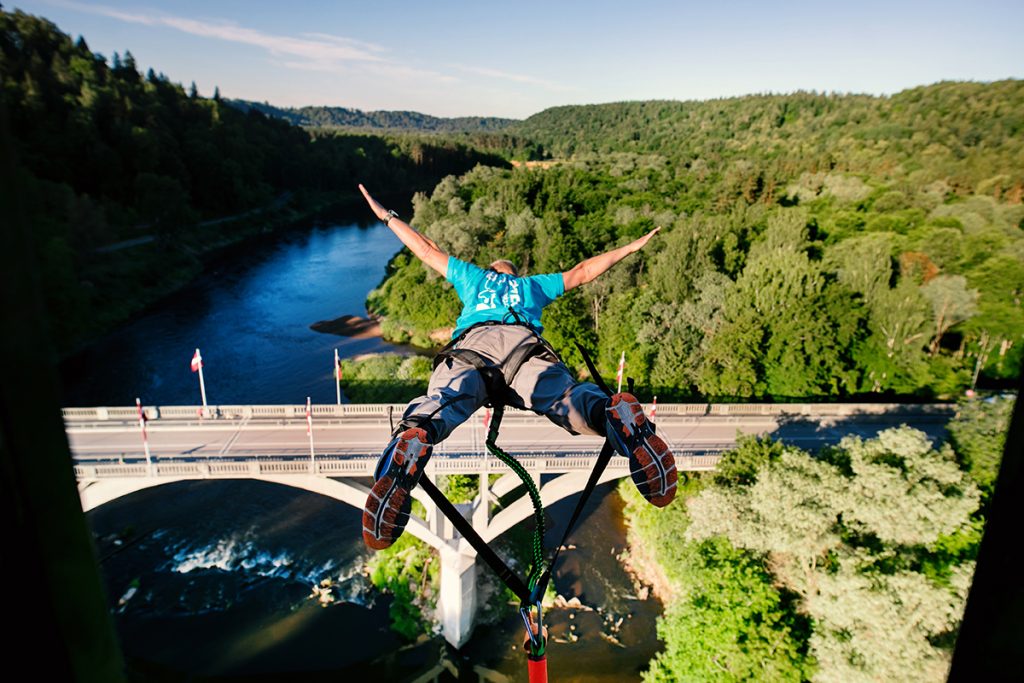
The roots of bungee jumping trace back to Pentecost Island in the Vanuatu archipelago, where locals have performed ritual jumps from wooden towers with vine ropes for centuries. Modern bungee jumping began in 1979 when Oxford University students jumped from the Clifton Suspension Bridge in Bristol.
Latvia's first bungee jumps took place in 1989 — the cords were made by cutting car tyre inner tubes into strips and braiding them together. The activity gained popularity after 1992, when Ivars Beitāns jumped from a 50-metre crane near the Latvian National Opera in Riga. He later created the Sigulda bungee operation and the Aerodium wind tunnel.
The process is straightforward: registration and weigh-in (the cord length is calibrated individually), safety briefing, harness attachment, the jump itself, and descent. The entire experience takes about an hour.
Want an even bigger adrenaline rush?
A tandem skydive from 4,000 m altitude gives you ~60 seconds of freefall and 5–7 minutes of canopy flight. No experience needed — a certified instructor is with you the entire time.
Learn about tandem skydiving — €239What types of bungee jumping exist?
Several types of bungee jumping exist, differing by launch platform, harness system, and number of participants. Each type offers different sensations and intensity. In Latvia, two main variants are available — solo and tandem jumps, both from the Sigulda cable car.
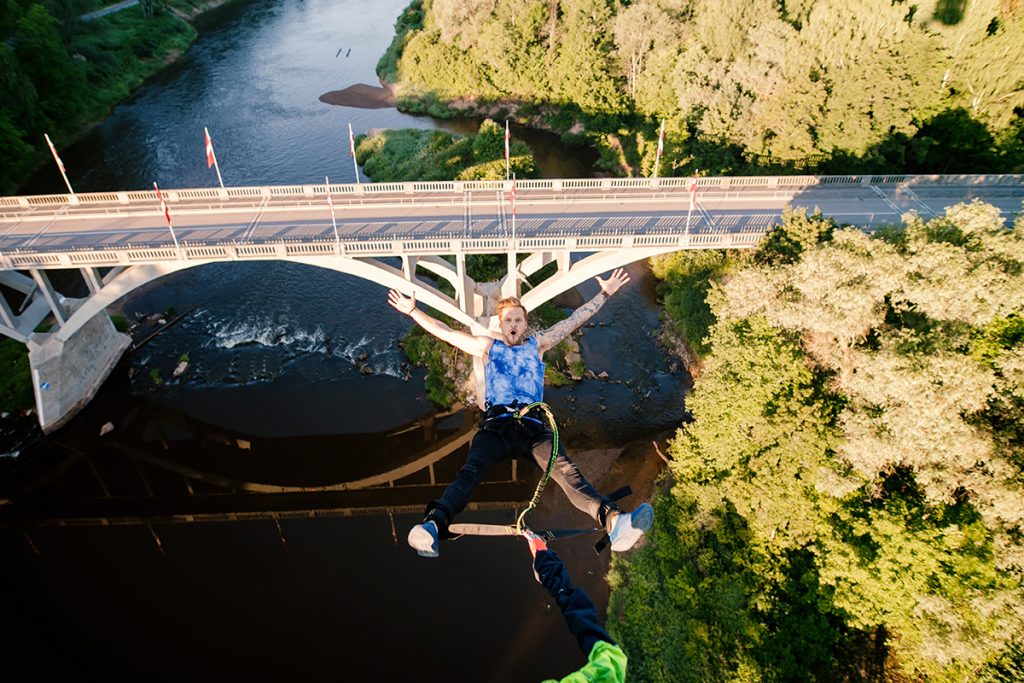
Classic solo jump
The most common type — the jumper stands at the platform edge and leaps alone, with the cord attached to the ankles or upper body. In Sigulda, this jump happens from 43 metres directly above the Gauja River. Minimum weight: 35 kg, maximum: 200 kg.
Tandem jump
Two people jump simultaneously, attached to a single bungee cord. A great option for couples or friends who want to share the experience. Combined weight must not exceed 200 kg. A tandem jump in Sigulda costs €139 for both.
Rope jumping
A related but different activity — the jumper falls, and a rope system converts the fall into a pendulum swing rather than vertical oscillations. In Latvia, Ropejumping.lv offers rope jumps from 47 metres at the old Sloka paper mill in Jūrmala — the highest in the Baltics. Solo: €80, tandem: €150.
Other types worldwide
Outside Latvia, more exotic variants exist: crane bungee, bridge jumps (popular in Switzerland and New Zealand — from 100+ metres), and even night bungee with LED lighting. The world's highest commercial bungee jump takes place from the Macau Tower in China — 233 metres.
How safe is bungee jumping?
Bungee jumping is statistically safe — the fatality rate is approximately 1 in 500,000 jumps. In Sigulda, over 150,000 jumps have been completed since 1992, and the technology meets mountaineering standards with a 7–20× safety reserve coefficient. However, it's important to understand the key differences from other extreme activities.
No backup system. This is the main risk. If the cord fails, there is no "plan B." For comparison, in skydiving there is a main parachute, a reserve parachute, and an automatic activation device (AAD) that deploys the reserve even if the jumper cannot.
Most common injuries include eye damage (retinal haemorrhages from sudden pressure changes during the rebound), neck and spinal micro-injuries from abrupt deceleration, and bruising around the ankles. These injuries are rare but possible.
Always verify that the operator is certified, equipment is regularly inspected, and safety systems have at least a 7× strength coefficient. Sigulda's operators have been running since 1992 — making it one of the most experienced bungee sites in Europe.
Where can you bungee jump in Latvia?
Latvia has two main locations for bungee jumping or similar experiences — in Sigulda from the cable car and in Jūrmala from the Sloka paper mill tower. Both offer unique settings and different sensations.
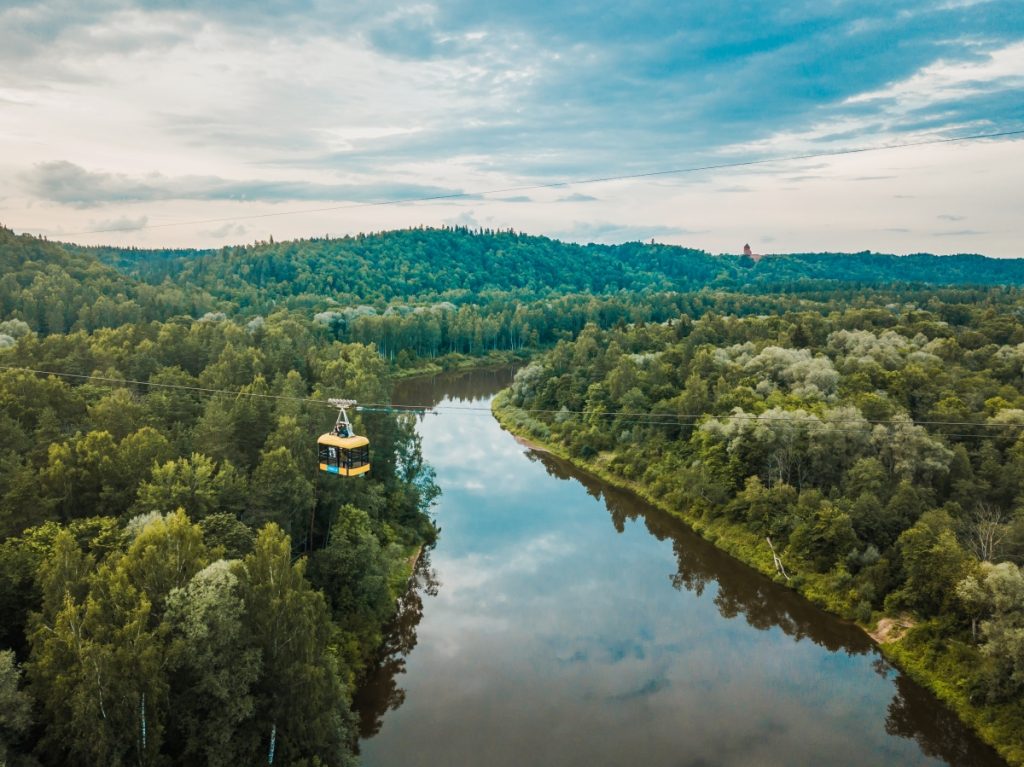
Bungee Sigulda — from the cable car above the Gauja
Bungee Sigulda is the only place in Northern Europe where you can bungee jump from a cable car. The car stops directly above the Gauja River, 43 metres up — the view across the entire Gauja ancient valley is breathtaking. Operating since 1992, season runs from spring to autumn with occasional winter events. Address: Jāņa Poruka iela 14, Sigulda.
Ropejumping.lv — rope jumping in Jūrmala
Ropejumping.lv offers rope jumps from 47 metres at the old Sloka paper mill in Jūrmala. Unlike bungee, the rope system converts the fall into a pendulum swing with views of the Lielupe River. You climb the tower yourself — which is an emotional challenge in itself. Season: May–October. Advance booking required.
How to prepare for your first bungee jump?
Your first bungee jump requires no physical fitness or prior experience — the key is mental readiness and appropriate clothing. Most jumpers agree that the hardest moment is the first step off the platform, not the fall itself. Here are practical tips that will help.
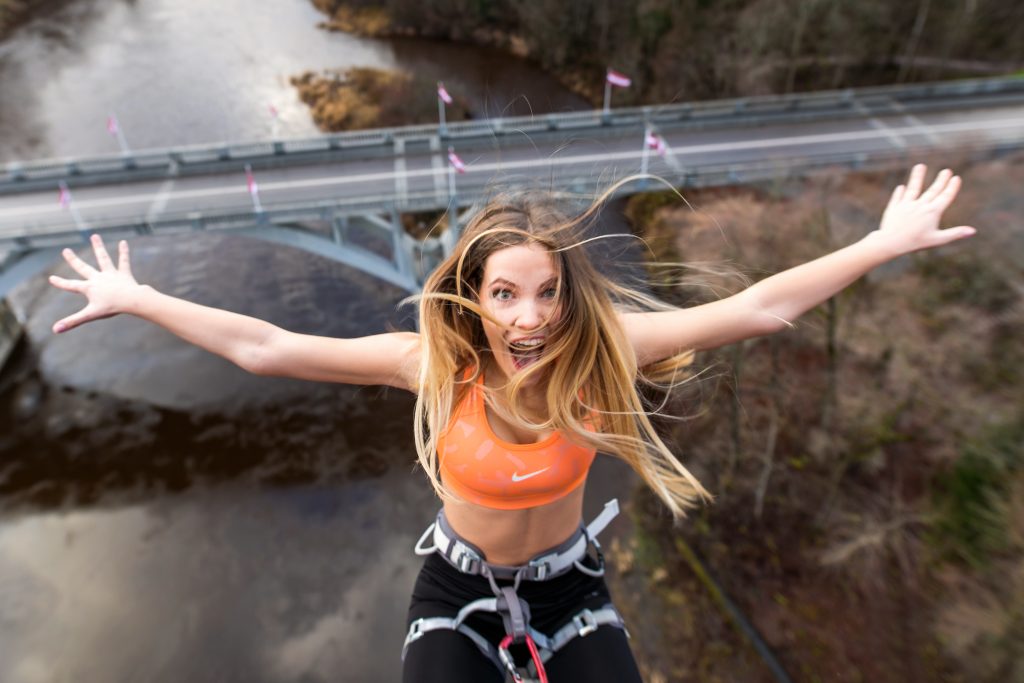
Clothing and accessories. Wear comfortable sportswear that doesn't restrict movement. Pockets should ideally zip shut — phones and keys can fall out. Closed-toe sports shoes are essential. Contact lenses are better than glasses, but if you wear glasses, secure them with a strap.
Eating and drinking. Don't jump on an empty or overly full stomach. A light meal 1–2 hours before the jump is ideal. Alcohol before jumping is strictly prohibited — operators check.
Mental preparation. Fear is normal — nearly every jumper feels it, even experienced ones. The main tip from instructors: don't look down too long and don't overthink it. When you hear "three, two, one" — just go. The longer you stand at the edge, the harder it gets.
How much does bungee jumping cost in Latvia?
A solo bungee jump in Latvia costs €80–89, while a tandem jump runs €139–150 depending on the location. The price includes equipment, briefing, and the jump itself. Video recording is extra. Here's how it compares with other adrenaline activities in Latvia:
| Activity | Price | Duration | Thrill level |
|---|---|---|---|
| Bungee Sigulda (solo) | €89 | ~30 sec active | ⭐⭐⭐⭐⭐ |
| Bungee Sigulda (tandem) | €139 | ~30 sec active | ⭐⭐⭐⭐⭐ |
| Rope jumping Jūrmala | from €80 | ~30 sec active | ⭐⭐⭐⭐⭐ |
| Aerodium wind tunnel | from €29 | 2–6 min flight | ⭐⭐⭐ |
| Tandem skydive (Skydive Latvia) | €239 | ~60 sec freefall + 5–7 min canopy | ⭐⭐⭐⭐⭐ |
| Oxygen Jump 5,500 m (Skydive Latvia) | €490 | ~90 sec freefall + 7–10 min canopy | ⭐⭐⭐⭐⭐+ |
The biggest difference is duration. In bungee, the active experience is ~30 seconds. In a tandem skydive — over 7 minutes total, including ~60 seconds of freefall at around 200 km/h and 5–7 minutes of peaceful canopy flight with panoramic views of the Latvian countryside.
Ready for the next level?
If bungee gave you a taste for adrenaline, skydiving is the natural next step. Skydive Latvia offers tandem jumps from 4,000 m (€239) and the unique Oxygen Jump from 5,500 m (€490) — the highest civilian tandem jump in Eastern Europe.
Jumps take place at Limbažu Airfield, about an hour's drive from Riga. Gift cards available from €30 with no expiration date.
Book a tandem skydive — €239What adrenaline alternatives are available in Latvia?
Latvia offers a surprisingly wide range of adrenaline activities — from flying in a wind tunnel to skydiving from 5,500 metres. If bungee jumping is your first step into the world of extreme sensations, here are other experiences worth trying.
Aerodium — wind tunnel flying in Sigulda
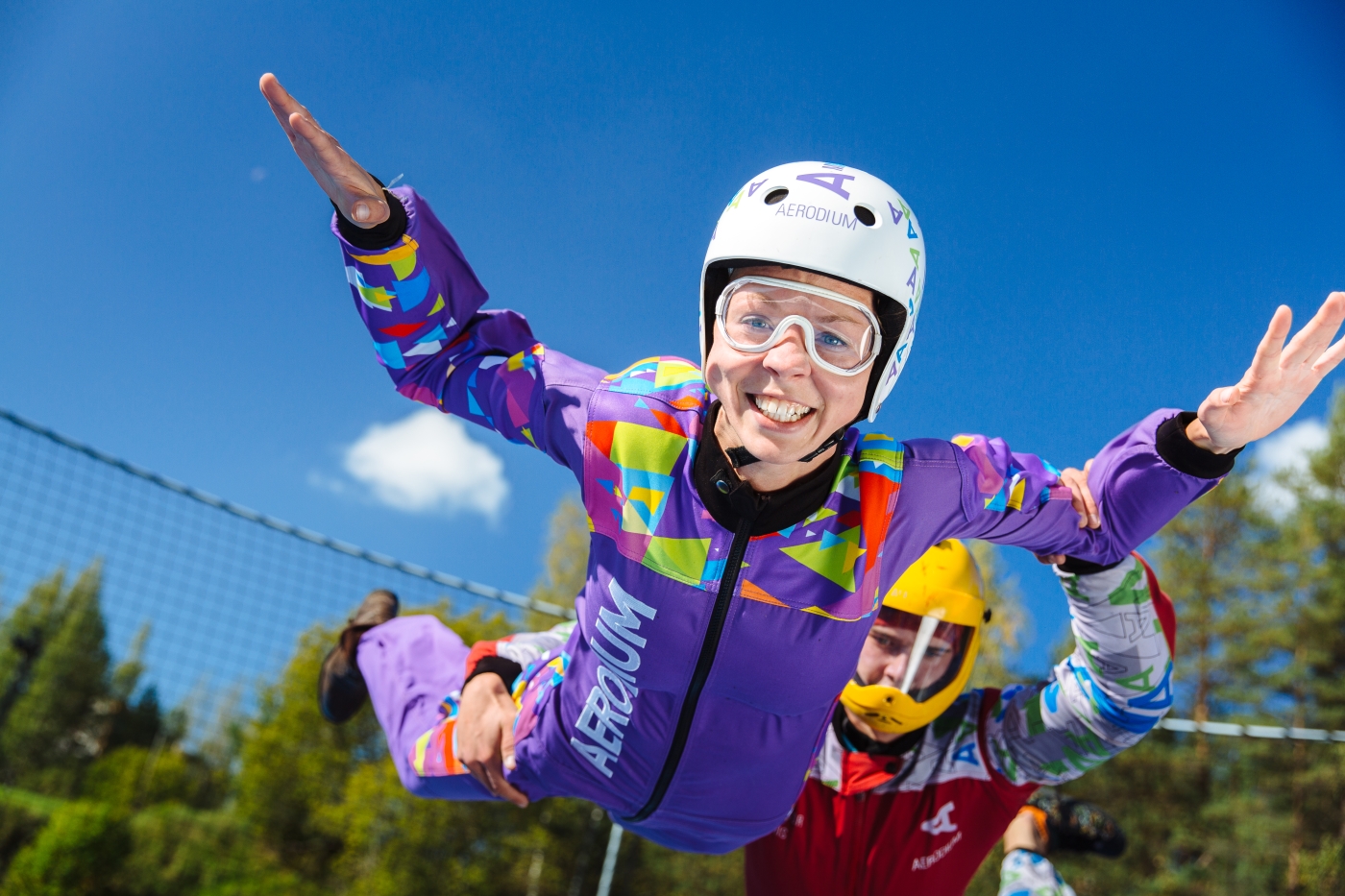
Aerodium is the first open-air vertical wind tunnel in Eastern Europe, allowing anyone from age 4 to experience the sensation of flight. The vertical airflow lifts your body, and by adjusting your position, you can perform various movements in the air. Total experience ~60 minutes (2–6 min active flight). Prices from €29. Sigulda, Vidzemes Highway km 47.
Tandem skydiving — Skydive Latvia

For a longer and more complete experience than bungee — a tandem skydive delivers ~60 seconds of freefall from 4,000 m at around 200 km/h, followed by 5–7 minutes of peaceful canopy flight. You're with a certified instructor throughout — no experience needed. Equipment includes main parachute, reserve parachute, and automatic activation device (AAD). €239, photo/video: +€70. Limbažu Airfield, ~1 h from Riga.
Oxygen Jump — the highest tandem jump in Eastern Europe

The premium experience from Skydive Latvia — a jump from 5,500 m altitude with supplemental oxygen masks. ~90 seconds of freefall at speeds up to 220 km/h and 7–10 minutes of canopy flight. Uses a dedicated Pilatus Porter PC-6/B2-H4 aircraft. €490. See also our full guide to adventure activities in Latvia.
An unforgettable gift — with no expiration date
Skydive Latvia gift cards start from €30 and cover all services — tandem jumps, Oxygen Jump, or AFF training. The key advantage: they have no expiration date. The recipient chooses when to jump.
Order a gift card — from €30Frequently asked questions
How safe is bungee jumping?
Statistically, the fatality rate is approximately 1 in 500,000 jumps. In Sigulda, over 150,000 jumps have been completed since 1992 with a 7–20× safety reserve. The main risk is the absence of a backup system — unlike skydiving, which has both a main and reserve parachute.
What's scarier — bungee jumping or skydiving?
Most people who've tried both say bungee jumping is scarier. From 43 metres, your brain fully registers how close the ground is. From 4,000 m, the earth looks like a map, and freefall feels more like flying than falling.
What are the weight and age restrictions?
At Bungee Sigulda: minimum weight for solo is 35 kg, maximum 200 kg. Tandem combined weight must not exceed 200 kg. Under-18s need a parent present to sign the waiver.
When is bungee season in Latvia?
Bungee Sigulda operates roughly from April to November. Summer features multiple sessions per week in the evenings; spring and autumn are weekends only. Some special winter events (Valentine's Day, Latvian Independence Day) run during the cold season.
Can you jump in the rain?
Yes, rain doesn't stop bungee jumping. The exception is severe thunderstorms or strong winds that could affect cable car operation. It's worth calling the operator on your jump day: +371 2838 3333.
What's the difference between bungee jumping and rope jumping?
In bungee, the elastic cord bounces you up and down (oscillations). In rope jumping, a non-elastic rope converts the fall into a pendulum swing — you fall and then swing beneath the platform. In Latvia, Ropejumping.lv offers rope jumps in Jūrmala.
Do I need to book in advance?
Recommended — yes. Bungee Sigulda accepts reservations online at siguldaadventures.com or by phone. Ropejumping.lv asks for at least 2 weeks' notice. Demand is high during the season, so early booking guarantees your preferred time.
Which makes a better gift — bungee or skydiving?
Bungee is excellent if the recipient wants a quick adrenaline hit at a lower price point (from €89). Skydiving offers a more complete experience — longer freefall, canopy flight, and panoramic views. Skydive Latvia gift cards have no expiration date.
Can I start learning to skydive after bungee?
Absolutely. Many skydiving enthusiasts started with bungee. The next step is a tandem jump with an instructor (€239). If you want to jump solo, Skydive Latvia offers an AFF training programme starting from €840.
